No matter where people go, they carry with them certain human instincts—such as hunger, love, passion, and emotion—and above all, the culture in which they were born and raised, although cultural traditions often evolve or diminish over successive generations. We see this pattern throughout history. To illustrate, when European explorers voyaged oceans to explore a New World, they carried their culture with them.
I am tempted to give another example: Hazrat Shahjalal was an Arab Sufi who was accompanied by 360 companions. He arrived in Sylhet. He and his companions brought with them not only Islam but also cultural practices that impacted this region. The same can be said of Bangladeshi migrants and immigrants who have already settled, or are yet to settle in different parts of the world. As first-generation immigrants, many Bangladeshis try to keep ties to their native culture overseas. This short study explores Bangladeshi cultural practices observed by the Bangladeshi community living in Ottawa.
To preserve, uphold, and promote Bangla culture, as well as to participate in multiculturalism, several organizations, institutions, and NGOs run by the Bengali community organize various cultural programs and events throughout the year.
Among these institutions, the Bangladesh High Commission (BHC) plays the most significant role in promoting and preserving Bangladeshi cultural practices in Ottawa. Situated in downtown Ottawa, close to Parliament Hill, the BHC supports and showcases various aspects of Bangladeshi culture. Its major cultural observances include Independence Day (26 March), Victory Day (16 December), and 21 February, which UNESCO proclaimed International Mother Language Day in 1999. To mark these occasions, the BHC organizes discussions and seminars that are attended by members of the Bangladeshi community and distinguished guests from diplomatic missions and public life in Ottawa. These events are usually followed by traditional Bangladeshi cuisine. The BHC also hosts Iftar gatherings during Ramadan, promoting both religious and culinary traditions. To encourage the participation of younger generations, it regularly organizes art competitions for children.
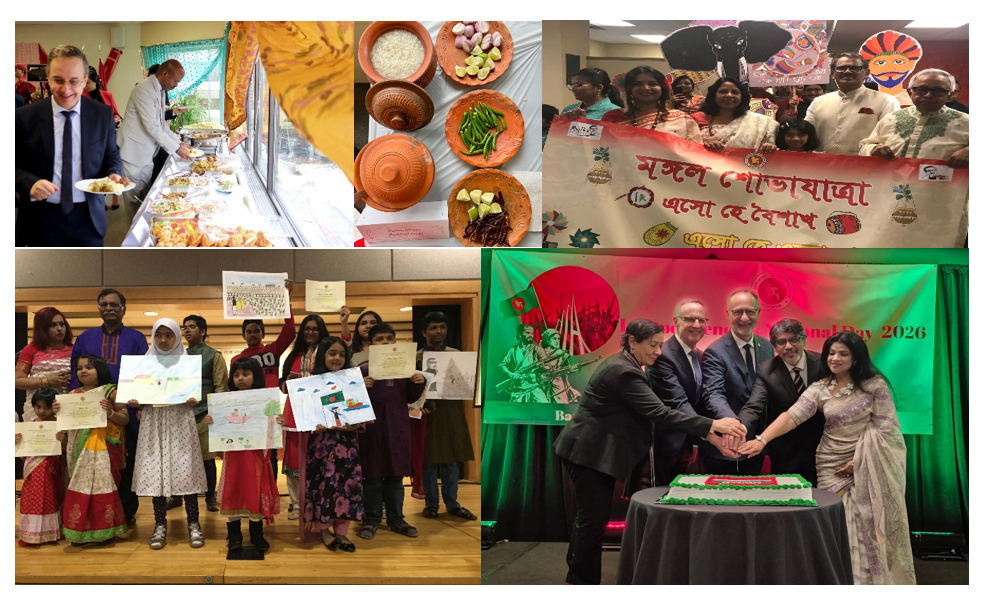 Beyond the Bangladesh High Commission, there are several active community-based non-profit organizations in Ottawa that play an important role in nurturing, promoting, and preserving Bangladeshi culture through various events, festivals, and cultural activities organized throughout the year. Among the most notable of these organizations are Bangladesh-Canada Association of Ottawa Valley (BACAOV), Usha Music School (UMS), the University of Ottawa’s Bangladeshi Students’ Association (UOBSA), Ashram, Bengali Community Service Centre of Canada (BCSCC), and Bangla Untold, to mention a few.
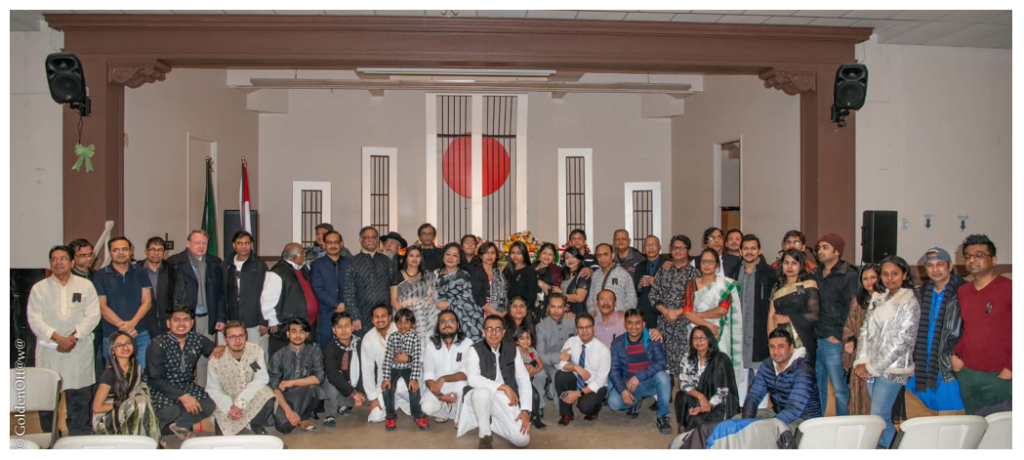
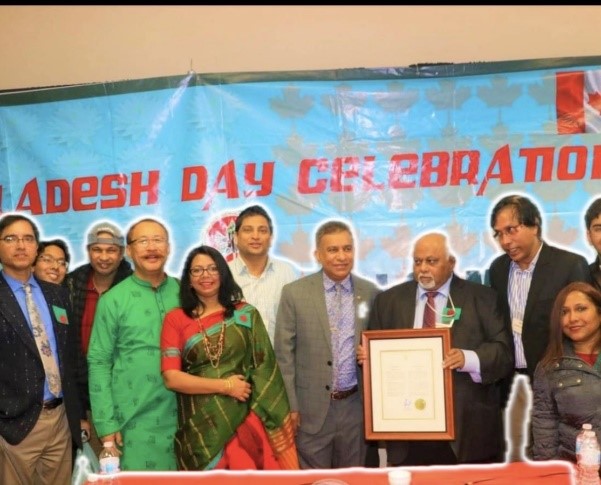
To begin with, Bangladesh-Canada Association of Ottawa Valley (BACAOV) is the oldest organization that plays a vital role in promoting and preserving Bangladeshi cultural practices in Ottawa. Founded in Ottawa primarily to raise donations for people affected by the atrocities committed during the Liberation War of 1971, BACAOV has grown into a vibrant community-based organization. It promotes community engagement by organizing varied socio-cultural events throughout the year such as 21st February, Pohela Boishak, Independence Day, Victory Day, and picnics, which are the major parts of Bangladeshi cultural practices. As an active organization, BACAOV continues the tradition of placing floral wreath at the Shaheed Minar at 12:01 a. m. on International Mother Language Day. So proud and active is this organization that it (BACAOV) has constructed a portable wooden replica of the Shaheed Minar for use during International Mother Language Day commemorations.
The observance of International Mother Language Day provides a useful example:
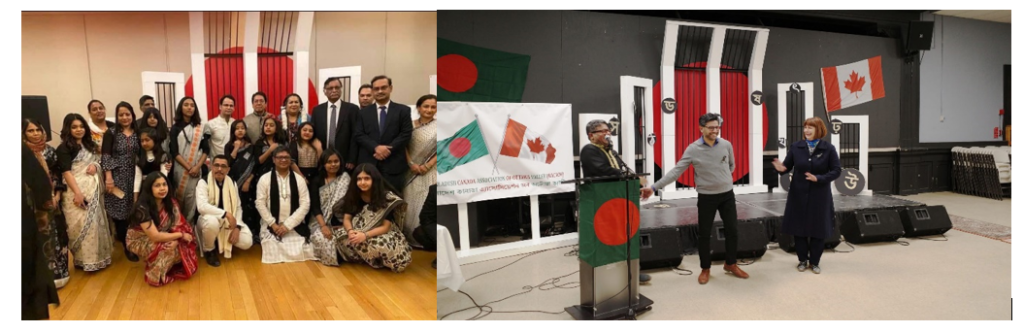
 Picnics and fairs are two forms of cultural practice in Bangladeshi society. The members of the Bangladeshi diaspora in Ottawa follow these two cultural practices. The fairs and picnics organized by BACAOV provide a useful example of how such cultural traditions are preserved and promoted in a diaspora setting.
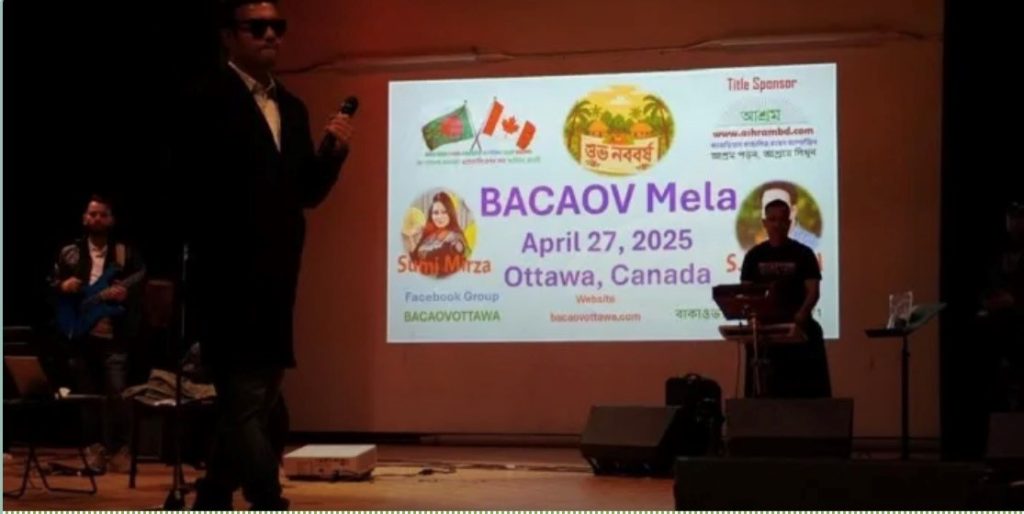
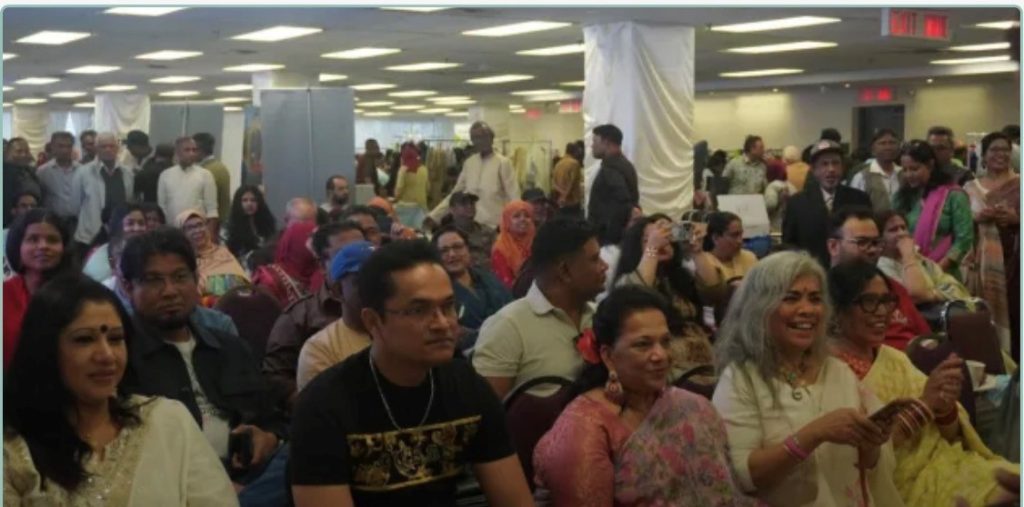 Additionally, BACAOV organizes other socio-cultural events. To cite an example, BACAOV organized the Heritage Week in April 14-29, 2020. It was a week-long cultural event ensuring the participation of immigrants from Burma, Cambodia, Laos, Sri Lanka, Bangladesh, Nepal and Thailand which observed the New Year in mid-April. Notably, it was BACAOV which first initiated to organize the Heritage Week and seek permission from the Ottawa Mayor office.
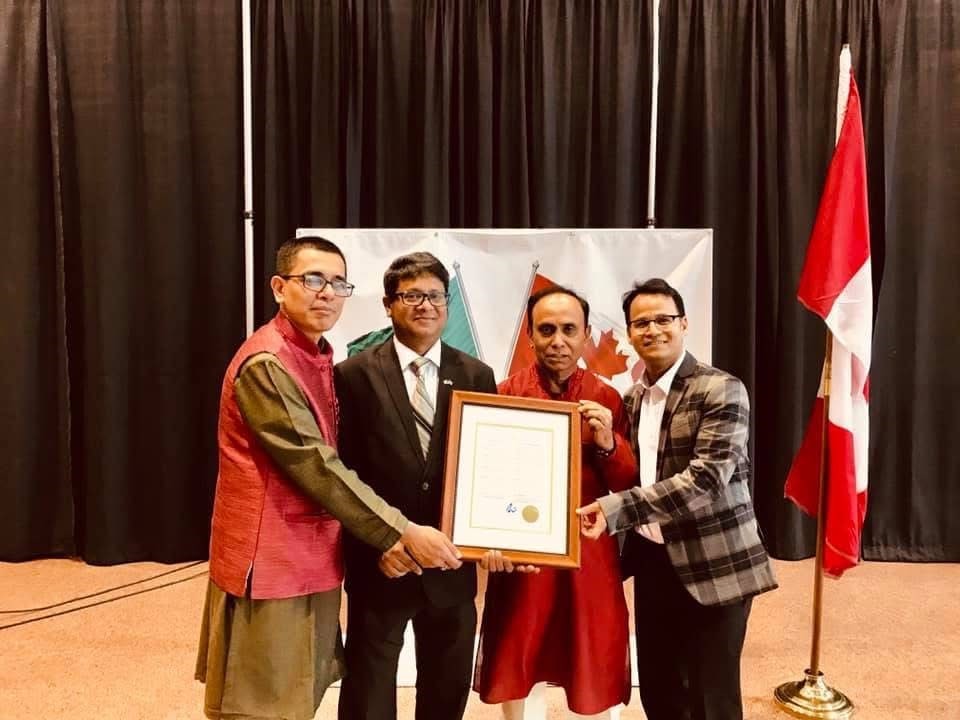
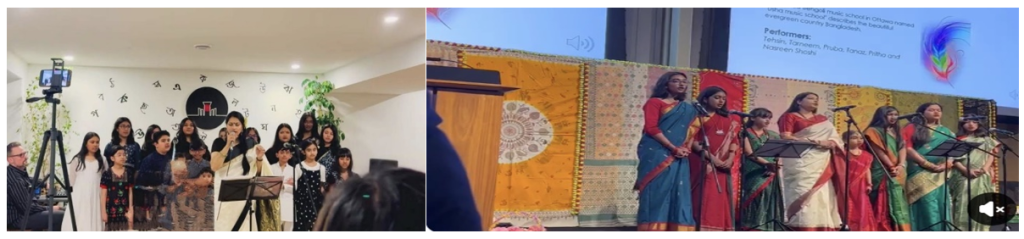
Usha Music School (UMS) is a reputed institution actively engaged in promoting Bangladeshi cultural practices within the diaspora community in Ottawa. As a music school, UMS is primarily dedicated to teaching and promoting Bengali music and performing arts. By training children and adults in vocal music and musical traditions, it helps preserve an important aspect of Bangladesh’s cultural heritage abroad. However, the scope of the school extends beyond music education. It promotes Bangladeshi culture among its students. Naturally, UMS observes International Mother Language Day, Bengali New Year, and Eid celebrations. Its students also actively participate in Ottawa’s Heritage Week celebrations. This way, this school promotes cultural awareness among its learners.
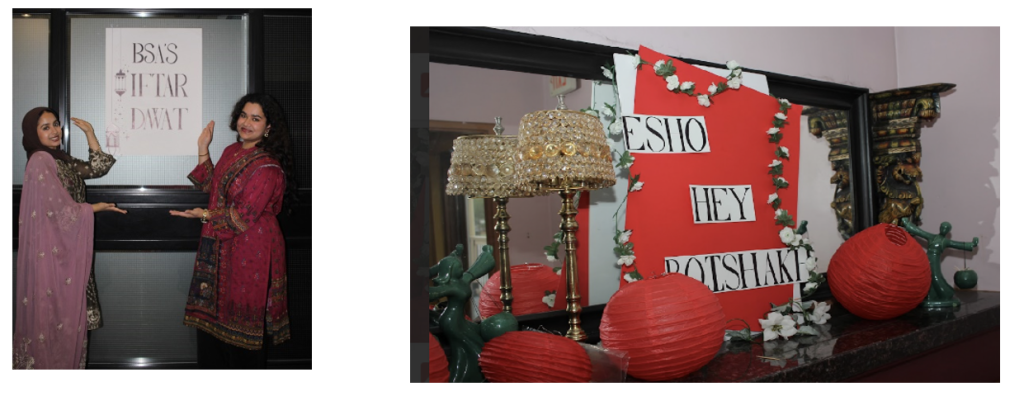
 The University of Ottawa’s Bangladeshi Students’ Association (UOBSA) is another significant venue where students find opportunities to promote and preserve Bangladeshi cultural practices. The cultural programs it has so far organized include (1) Esho Hey Boishakh; (2) Adda Night; (3) Chai and Board-Game Gatherings; (4) Bhooter Adda (Fusion of Halloween and Adda); and (5) Meyder Mehndi.
 Ashram Magazine is a popular publication in Ottawa and serves as an important platform for writers from the Bangladeshi diaspora living in Ottawa. Besides publishing writings of Ottawa’s writers, it promotes vocal artists by organizing cultural events throughout the year.
Founded in 2002, Bengali Community Service Centre of Canada (BCSCC) is another non-profit and cultural organization actively involved in promoting and preserving Bengali culture and heritage among members of the Bangladeshi diaspora.
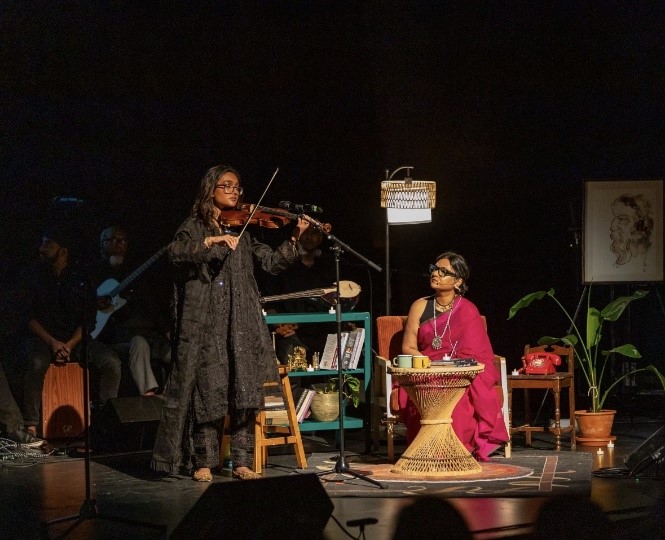
 Bengal Untold (BU) is another cultural organization based in Ottawa. Compared with other cultural organizations in in the city, BU is one of the newest. Founded in 2026, BU has gained recognition through its cultural project “Seasons of Bengal” presented on May 10, 2026.
 In conclusion, Bangladeshi cultural practices are maintained, promoted, and preserved in Ottawa through the concerted efforts of the Bangladesh High Commission, community-based organizations, cultural institutions, student groups, and magazines. Their contributions are instrumental in ensuring the continuity and visibility of Bangladeshi culture in the diaspora.
Mohsin Ali
Mohsin Ali—a serious learner—holds multiple degrees. He has earned four master’s degrees such as an MA in English Literature, an MA in English Language Teaching, an MA in Globalization and International Development, and an MA in Education. He possesses the knowledge and skills required to conduct rigorous research. His research interests include international development, education for social transformation, refugee integration issues, identity politics, and fragile state issues. Proficient in cultural and literary theories, Mohsin has authored books and articles and presented research papers at conferences hosted by Carleton University in 2018 and York University in 2019. He is a founding director of the Centre for Global Development Re/conciliation, and the Institute for Justice, Decolonization and Peace.