Introduction
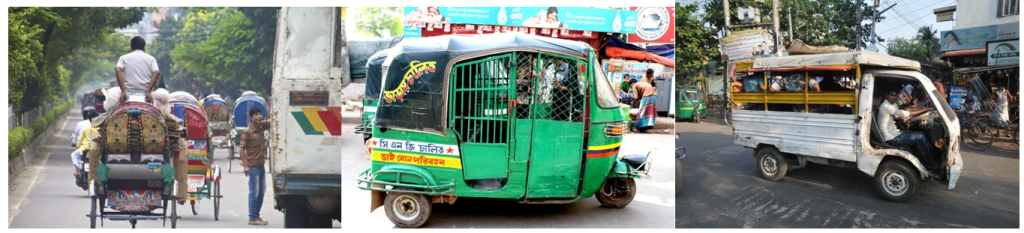
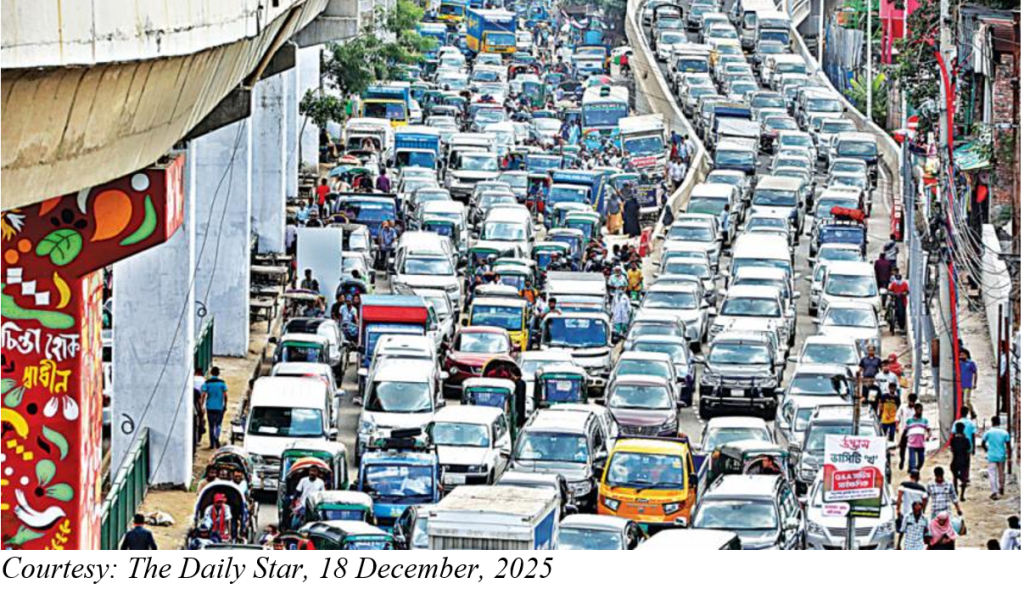
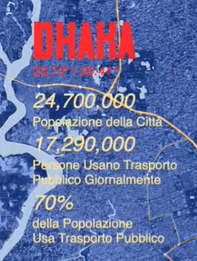
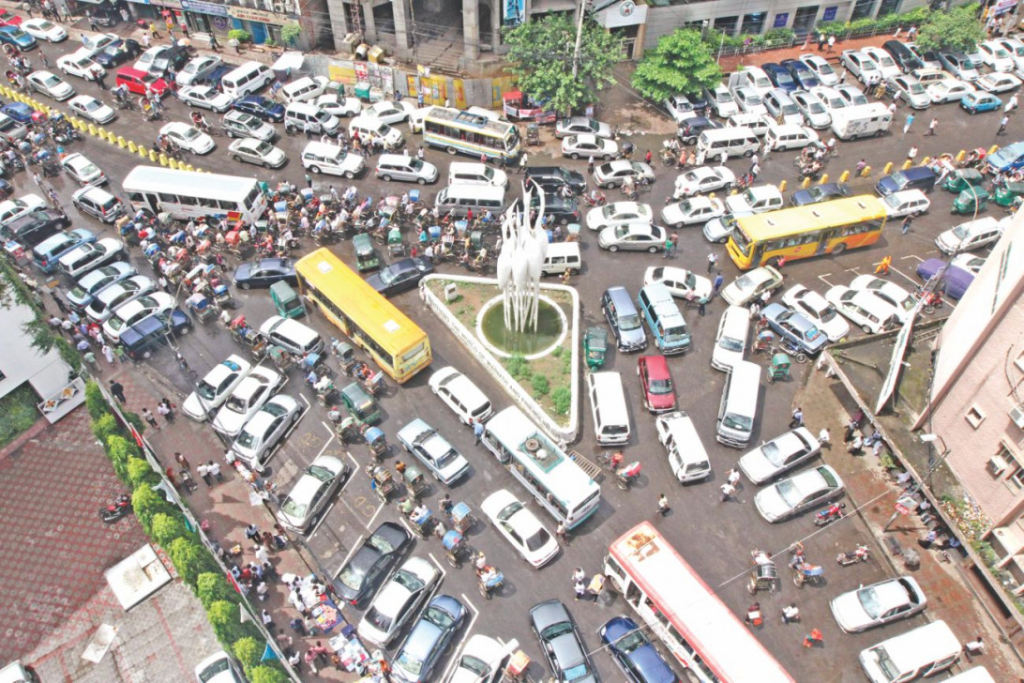
In a congested city Dhaka, transportation system plays a crucial role in mobility by reducing travel time and increasing accessibility (Dhaka moves video link). In economics, this means-maximizing benefits while minimizing distance and travel costs. Common transport modes include-buses, auto-rickshaws, CNGs, cars, and motorcycles.
Buses are one of the most convenient options for the common people because fares are generally lower and affordable, particularly for some commuters, for example, students and workers. While most bus operators offer discounts for such low-income commuters, there is no such concessional fares for alternative transportation modes, like auto rickshaws or uber rides.
For example, traveling from Bashabo to Dhanmondi 27 may cost approximately 200 BDT by a rickshaw, 250–300 BDT by a CNG, 180–250 BDT by a motorcycle, and around 400–500 BDT by a uber car. Whereas the bus fare for the same route is only about 30–40 BDT. This large price difference highlights the gap between fares and service quality.
Despite affordability, buses often face service issues such as overcrowding and safety concerns. Moreover, many buses use low-quality diesel to reduce costs which causes environmental or air pollution. In contrast, alternative modes of transport offer certain benefits like-guaranteed seating, privacy, faster travel, i.e., higher comfort; but at higher fares.
 Therefore, many people choose alternative transportation modes for better service even without discounts. On the other hand, people generally resist even small fare increases in bus services. This resistance to bus fare increases may be used as an excuse for low quality public transportation and poses a significant policy dilemma for policymakers. This study, undertaken as an undergraduate research project, investigates:
- If the bus service quality improves, such as guaranteed seating, safety, and eco-friendly faster mobility, would passengers, be willing to pay a slightly higher fare?
- And if so, how much more would they pay?
The finding of this study should help to evaluate and understand the trade-off between low fares with limited or inferior service quality and high fares with improved quality services.
Literature review
Previous studies have examined bus service quality, commuter experiences, and willingness to pay for improved public transport in Dhaka. (Rahman & Nahrin, 2012) (Rahman, D., Bhuiyan, M. I. H., & Khan, N. A. ,2023) (Umme, Aya, & Hisashi, 2023; Rahman, Bhuiyan, & Khan, 2023).
Methodology and data sources
This study uses a quantitative approach based on primary survey data. A structured questionnaire was distributed via google forms to people who regularly or often use public transportation.
The study is guided by several Economical theories
- Consumer utility theory suggests that individuals choose transportation that-maximizes their overall satisfaction by considering such factors as cost, comfort, safety and convenience.
- Willingness to pay measures, how much commuters want to pay for better services.
- Service quality theory explains, improvements in factors like cost, safety, comfort can increase user satisfaction.
- Price quality trade-off, consumer may accept higher fares to obtain better service quality.
- Behavioural economics (perceived fairness) particularly indicates that commuters will pay higher fares if the improvements are worth the additional cost.
Survey findings/results
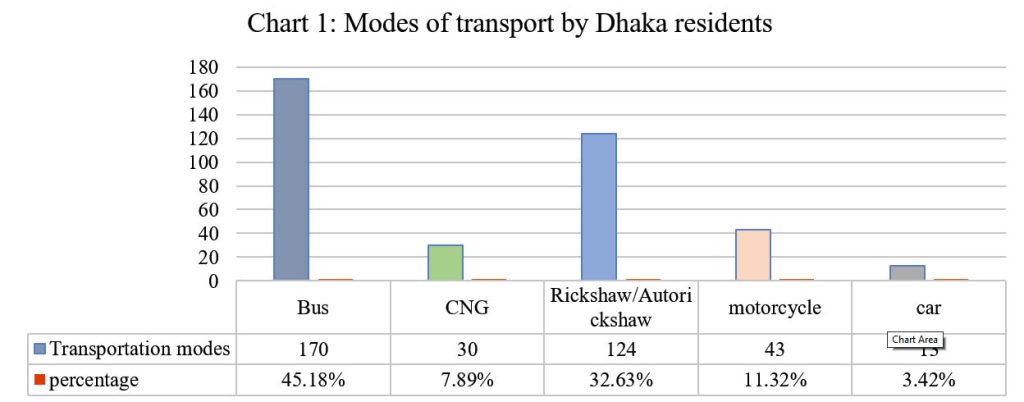
The survey collected responses from 250 participants, consisting of 156 (62.4%) students, 88 (35.2%) service holders and 6 (2.2%) other commuters. Chart 1 presents the distribution of transportation modes used by the survey participants. As can be seen, the most preferred transportation mode is bus; slightly more than 45% using buses for their daily commutes. The next preferred mode is rickshaws and autorickshaws – over 32% using them.
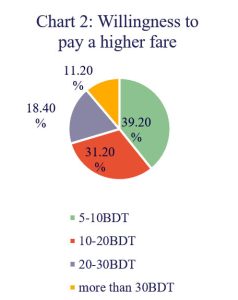 Commuters daily travel expenses range from (BDT 20-1000). Current average bus fare of their routes is BDT 20-80 and 211respondents (87.55%) are willing to pay a higher fare (Chart 2)
The survey findings show that 39.2% of respondents are willing to pay on an average an additional BDT 5–10 for improved bus services.
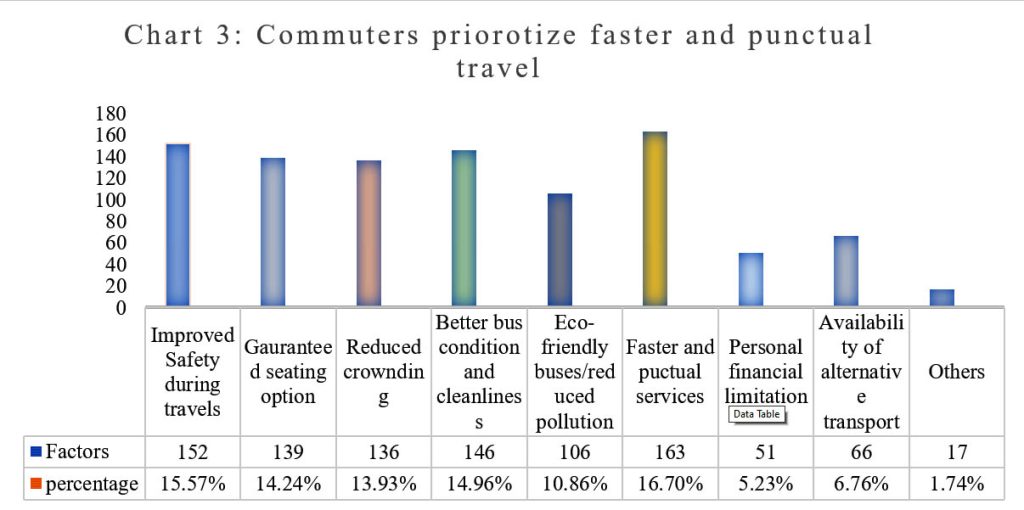
Chart 3 indicates that in Dhaka’s congested environment, commuters prioritize faster and punctual travel, even at higher transportation costs.
The findings suggest that improved bus services can increase passenger’s willingness to accept moderate fare adjustments and help policymakers to design more efficient and sustainable public transportation systems in Dhaka.

Marufa Alam Raha
Aspiring economist and writer from Bangladesh. She completed her HSC in Business Studies at Viqarunnisa Noon School and College and is now pursuing her higher studies in Economics at East West University. With a strong interest in social issues, public policy, and economic trends, Marufa actively engages in academic research, debating, and article writing. She aims to simplify complex ideas and present them in an insightful and engaging manner for readers, connecting real-world issues with thoughtful analysis.

Rayyan Rashid
Rayyan Rashid is a dedicated economics student of East West University (Dhaka) with a strong interest in research and academic work. He is highly active and approaches tasks with a multitasking mindset, balancing responsibilities efficiently. With a keen interest in economic concepts, he also excels in creating impactful presentations, particularly through well-structured and visually engaging PowerPoint work.