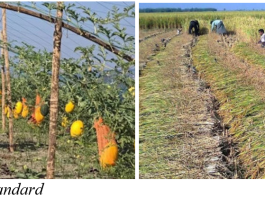
For decades, the global perception of Bangladesh was anchored to a single symbol of industrial success: Its ready-made garment (RMG) sector. Dominating nearly four-fifths of national export earnings, garments paired with agriculture served as the country’s primary economic engines. That foundation remains intact, yet the national growth narrative is rapidly expanding. Bangladesh is now positioning itself across higher-value sectors including agro-processing, footwear, pharmaceuticals and increasingly, shipbuilding.
Shipbuilding represents a strategic shift: An industry that transforms riverbanks into production corridors, mechanical skills into industrial capacity, and steel into vessels that support domestic commerce and international trade. This article explores the emerging dynamics of Bangladesh’s shipbuilding sector, examining its economic potential, industrial capabilities, and prospects for global competitiveness.
From rivers to revenues: The sector in transition
Bangladesh’s shipbuilding industry has evolved from a domestically-oriented supplier into one of Asia’s most promising exporters of small and medium-sized vessels. The domestic market, valued at approximately $1 billion annually, is supported by over 100 shipbuilders and more than 120 registered yards. Projections from industry leaders and the World Bank estimate 10-15% annual growth, driven by demand for 300-400 new vessels over the next decade.
From a slow start, the sector has begun to make a visible international mark. Bangladesh has already delivered around $200 million worth of vessels to Europe, Africa, and Asia. With supportive financing and improvements in supply chain coordination, annual export earnings could realistically reach $650 million by 2026, with a longer-term target of $1 billion becoming feasible. The labour implications are equally significant. Tens of thousands of workers, welders, fabricators, marine engineers, naval architects and quality inspectors drive the sector. Modern training facilities and technical programs are steadily enhancing workforce capabilities, aligning domestic skill sets with international standards.
Bangladesh’s competitive advantage is measurable: Internationally certified vessels priced 10-30% below those produced by regional competitors such as China, Vietnam, and India. With the global market for green and energy-efficient vessels expected to reach $193 billion by 2030, With momentum building, Bangladesh could lift exports to $2-4 billion in the decade ahead, provided that financing constraints, supply chain reliability, and technological adoption continue to improve.
The industry employs approximately 300,000 people, including welders, naval architects, marine engineers, and quality inspectors. Training programs are now integrated with modern technical curricula, aiming to bridge the skill gap and meet global standards. The country’s competitive edge lies in its internationally certified vessels, offered at 10-30% lower costs than those of regional competitors.
Bangladesh’s position in a changing shipbuilding landscape

Bangladesh’s shipbuilding sector is increasingly viewed as a strategic component of the country’s industrial transformation. Rooted in one of the world’s most extensive river networks, the industry has grown from meeting domestic transport needs to supplying internationally certified vessels for regional and overseas markets. This evolution reflects a broader national shift toward higher-value manufacturing, where technical capability and process discipline matter as much as cost advantage.
The country’s competitive position now rests on three pillars: consistent domestic demand, a rapidly developing skilled workforce, and the ability to produce class-certified small and mid-sized vessels at prices lower than those of regional competitors. Investment in modern fabrication facilities, improved slipways, and compliance with global classification bodies has strengthened Bangladesh’s credibility in export markets previously dominated by Vietnam and India. Recent contracts secured by several leading yards, including passenger ferries, dredgers, and workboats for African and European clients, illustrate that Bangladesh is gradually entering the global small-vessel supply chain.
These advances also carry broader economic implications. Shipbuilding requires engineering talent, structured workflows, and long-term planning, placing it among the few Bangladeshi industries operating within international technical regimes. As more yards adopt enhanced testing, design, and documentation standards, the sector signals a gradual but meaningful shift in Bangladesh’s industrial profile.
Bangladesh vs. regional competitors
Bangladesh’s shipbuilding niche lies firmly in the construction of small- to mid-sized vessels, ferries, tugs, dredgers, coasters, patrol boats, and passenger craft. This positions the country differently from the heavyweight regional builders who dominate the global orderbook. China’s COSCO Shipyard Group, South Korea’s Hyundai Heavy Industries and Daewoo Shipbuilding & Marine Engineering (DSME), and Japan’s Mitsubishi Heavy Industries focus primarily on massive container ships, LNG carriers, tankers, and naval vessels. India’s Cochin Shipyard Limited and Goa Shipyard Limited compete heavily in defence, offshore vessels, and mid-sized commercial ships. Vietnam’s Ha Long Shipbuilding and Damen Vietnam specialize in mid-sized steel-hull vessels with strong European partnerships.
Against this competitive landscape, Bangladesh’s advantages stand out clearly:
Labour costs: Labour remains one of Bangladesh’s strongest comparative advantages. Wages are roughly 20-30% lower than those in China, India, and Vietnam, allowing Bangladeshi yards to offer highly competitive pricing on small and medium vessels. This makes the country especially attractive to African, Middle Eastern, and Southeast Asian buyers seeking cost-effective but class-certified vessels.
Domestic demand: With more than 800 rivers and 24,000 km of navigable waterways, Bangladesh’s transport ecosystem is among the most extensive in the world. This phenomenal internal demand ensures a continuous flow of domestic orders for ferries, tankers, cargo barges, and dredgers which stabilizes production even when export markets fluctuate. Few competitors have such a large, river-dependent economy generating constant baseline demand.
Geopolitical positioning: Bangladesh benefits from preferential trade access due to its LDC status. It enjoys tariff-free or reduced-tariff access to markets in the EU, the UK, Africa, and parts of Southeast Asia. Although this advantage will gradually change after 2026, current orders still benefit from these concessions. In contrast, shipbuilders in China and India often face steeper tariffs when exporting to Western buyers.
Product specialization: While China and Korea dominate the giant-vessel segment and India focuses heavily on naval and offshore vessels, Bangladesh has carved out a reputation for reliable small and mid-sized ships. These vessels meet standards set by Bureau Veritas, Lloyd’s Register, RINA, and ABS, enabling Bangladesh to compete directly with Vietnam and India in quality but at a lower price.
Environmental shift: As the global market pivots toward greener maritime solutions, Bangladesh has begun to adapt. Some Bangladeshi yards including KSBL now offer LNG-powered ferries, low-emission dredgers, and energy-efficient hull designs. This emerging specialization appeals to climate-conscious buyers in Europe, East Africa, and the Middle East. With global demand for green-compliant vessels set to rise sharply by 2030, Bangladesh’s early movement into this space strengthens its competitive positioning.
Challenges and solutions
Despite the progress, the sector faces several challenges:
- Financing Bottlenecks: Local banks are reluctant to offer long-term, low-interest loans. As a result, many yards rely on short-term loans at rates exceeding 14%, creating cash flow stress. To address this, the Bangladesh Bank introduced a Tk 2,000 crore refinance facility. KSBL independently secured a USD 80 million long-term loan from the World Bank to build private jetties and a drydock.
- Import Dependence: Approximately 50-60% of ship components such as steel plates, engines, and navigation systems are imported, making projects vulnerable to global supply shocks. Industry leaders have advocated for tax breaks and bonded warehouse access to reduce costs and improve material flow.
- Technological Constraints: Most design and testing capabilities are outsourced due to a lack of local expertise. Some yards, including KSBL, have responded with overseas partnerships for technology transfer notably collaborating with Dutch firms on advanced dredger models.
- Policy Gaps: Regulatory red tape and limited export incentives have held back growth. Although shipbuilding is a priority sector with access to some incentives (10% export subsidy, 5% duty on raw materials), the industry still lacks a dedicated shipbuilding development bank, unlike its Chinese and Indian counterparts.
- Workforce skill gap: While labour is abundant and low-cost, many workers lack high-level technical training. Private shipbuilders and the government have started to invest in marine engineering institutes and vocational programs to address this.
- No female participation: Women are largely absent on the yard floor, especially in cutting, welding, rigging, and paint leaving skills untapped and slowing gains in safety and quality. Fixes are straightforward: launch paid apprenticeships (welding/fitting/NDT/electrical/QA), issue PPE that fits, add separate toilets/changing plus a lactation room, secure early/late shifts with transport and lighting, enforce zero-tolerance harassment with confidential reporting.
Karnafuly Ship Builders Ltd.: A yard with a wider horizon
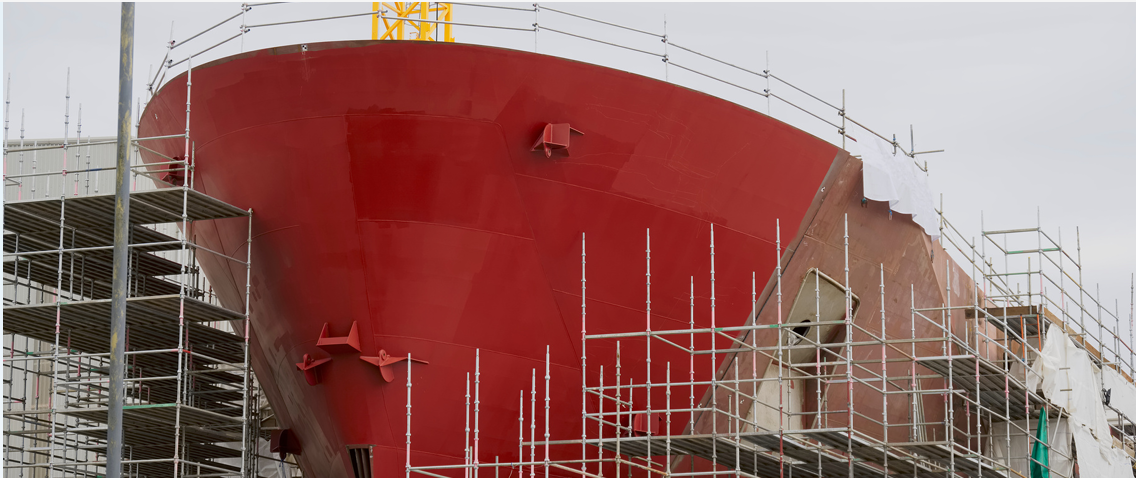
When Bangladesh’s modern shipbuilding story is told, one name surfaces quickly: Karnafuly Ship Builders Ltd. (KSBL). Founded in 1994 by Engineer Abdur Rashid, KSBL has grown into one of the country’s leading private shipyards, building and repairing vessels and delivering marine engineering services for both local and international clients. The blueprint is straightforward and strategic three yards: Ichhanagar, Narayanganj, and Chattogram supported by a corporate office in Banani, Dhaka that handles planning, procurement, and administration. The article focuses on the Narayanganj yard- a busy riverside where plates and blocks are transformed into hulls that are outfitted into working ships powered by more than 150 permanent workers and specialists. It is close enough to Dhaka for fast coordination, yet rooted on the water for efficient movement of materials and finished craft. From cutting and fabrication to outfitting and fast repairs, this place shows how Bangladesh can make shipbuilding real.
One of the engineers of the yard stated that “This site alone can produce 50+ vessels annually under optimal conditions. The current orderbook includes seven cruise ships, two dredgers, and over thirteen additional vessels in varying stages of construction. Two major international projects, including a significant contract for Kenya, highlight the yard’s export credibility”.
Quality standards are ensured through oversight from Bureau Veritas (a global leader in testing, inspection, and certification (TIC) services), whose classification requirements guide the yard’s adherence to global norms in design, documentation, and manufacturing.
Operational rhythms and global competitiveness
KSBL’s operational model exemplifies disciplined process management. Heavy machinery is serviced quarterly to avoid downtime; materials are sourced from China, India, and the United States; and engines arrive from the Netherlands. When supply chains align, a fully classed vessel can be delivered in approximately 18 months.
Seasonal variations matter: Winter provides optimal working conditions, while weekends shortened to Fridays until midday which sustain production tempo. Pricing underscores Bangladesh’s competitive edge. One of the cruise vessels under construction is valued at Tk 98 crore, a figure that positions KSBL as a cost-competitive alternative to regional shipbuilders while maintaining class certification and finish quality.
A Decade of transformation (2015-2025)
The early 2010s were challenging: A global downturn slowed shipbuilding worldwide. The recovery reshaped where Bangladesh is headed. By 2023, KSBL’s orderbook approached Tk 2,000 crore, reflecting renewed domestic and international confidence.
Notable milestones include:
- A $47 million green-vessel contract with the Netherlands.
- A ferry program with Kenya Shipyards Limited and the Kenya Ports Authority.
- Continued exports of workboats, dredgers, ferries, and cruise vessels to Europe, Africa, and Asia.
Today, the product range includes:
- Dredgers: Cutter suction, hopper, split-hopper, and pontoon-mounted grab.
- Workboats: Tugs, barges, buoy tenders, and survey craft.
- Passenger vessels: Inland ferries, coastal ships, and cruise vessels.
People behind the hulls
At KSBL’s Narayanganj yard, a ship takes 18 months of steady routines and skilled hands keep it on track from first cut to delivery.
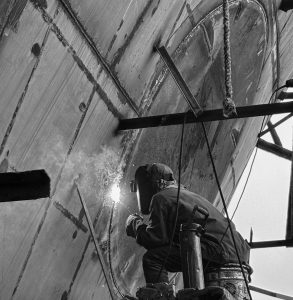
The workday does not begin with steel; it begins with safety. Before the first weld ignites, the workers gather for a short assembly where supervisors outline the day’s tasks and repeat the non-negotiables: PPE must be worn, permits must be checked, and shortcuts are never allowed. The rule against underage labour is stated plainly and upheld consistently. In a country where informal work remains widespread, this simple morning ritual becomes a marker of seriousness which is evidence that safety is not a decorative idea but a daily practice.

The schedule is intense, seven days of operation, with Fridays ending at noon, but pay is provided for a full day. Wages arrive monthly, without delay. Those details may sound procedural, but for industrial workers across the country, the reliability of a paycheque is the difference between stability and uncertainty.
Meals are part of the system, too. Permanent workers receive two snack breaks and three full meals a day; temporary workers receive snacks during their shift. On-site housing is available for those stationed far from home. And woven into the annual cycle are two bonuses, paid leave for urgent needs, and a yearly increment tied to performance. These are not grand gestures. They are the small, predictable pillars on which a long-term workforce stands.
One voice captures this more clearly than any policy document. A worker in his sixties, with more than twenty-five years at KSBL split between Chattogram and Narayanganj, put it simply: “I’m satisfied with the work and the wages; this is what we rely on. If I wasn’t satisfied, I wouldn’t have stayed this long.” His words reflect not nostalgia but trust a long arc of experience suggesting that the yard has kept its promises.
Beyond the shop floor, the environment is disciplined. Access is tightly controlled, with two armed guards on patrol and clear procedures governing movement. Inside the yard, things run in order: tools in place, warnings up, tasks step by step.

Fariza Khan Aishy
Fariza Khan Aishy is an undergraduate economics student passionate about development economics and trade. A research-driven critical thinker, she transforms ideas into sharp analytical writing. With notable achievements from academic competitions, she also serves as the General Secretary of the East West University Economics Club.

Guljar Ahmed Siam
Guljar Ahmed Siam is an undergraduate Economics student at East West University and Joint Secretary of the East West University Economics Club. His interests include development economics, international trade, and environmental economics, with a focus on research and policy analysis.

Rakib Chowdhury
Rakib Chowdhury is an Economics student at East West University and President of the East West University Economics Club. His interest includes geopolitical economics, with a focus on how global power dynamics and strategic alliances shape international economic outcomes.