Bangladesh is often hailed as a “development miracle”, a nation that has defied expectations to achieve remarkable economic growth and poverty reduction. Yet, as we navigate the midpoint of 2026, a sobering reality remains etched in the faces of our youngest citizens. The latest findings from national nutrition and health assessments reveal a paradox: while economic indicators continue to improve, the physical and cognitive development of many Bangladeshi children remains under threat.
The stunting paradox and the wasting warning
Over the past decade, Bangladesh has made notable progress in reducing stunting among children. The prevalence of stunting has declined significantly from levels approaching 40% in the early 2010s to approximately 24% in recent surveys. This achievement reflects the impact of long-term investments in maternal and child health, immunization programmes, and poverty reduction initiatives.
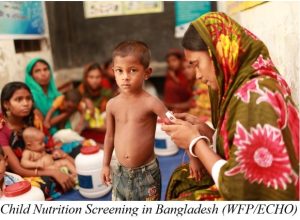 Despite this progress, the reality remains concerning. Nearly one in four Bangladeshi children continues to experience stunted growth, a condition that can permanently affect physical development, learning capacity, and future earning potential.
Even more alarming is the rise in wasting, a form of acute malnutrition characterized by low weight-for-height. Recent data indicate that wasting has increased substantially in recent years, rising from 8% in the 2017–18 Bangladesh Demographic and Health Survey (BDHS) to approximately 11% in BDHS 2022, suggesting that children are becoming more vulnerable to immediate shocks such as rising food prices, climate-related disasters, economic instability, and disruptions in household food security.
This increase in acute malnutrition serves as a warning sign that while long-term nutrition outcomes have improved, short-term resilience remains fragile.
The silent crisis: Lead exposure and ultra-processed foods
One of the most troubling findings emerging from recent public health assessments is the widespread exposure of children to lead contamination. Elevated blood lead levels among young children represent a hidden but devastating threat to national development.
Lead poisoning impairs cognitive development, reduces educational attainment, and can cause lifelong neurological damage. The burden is particularly severe in densely populated urban areas where environmental contamination from informal industries, waste recycling, and unsafe consumer products remains widespread.
At the same time, Bangladesh is undergoing a significant dietary transition. Traditional meals consisting of rice, vegetables, pulses, and fish are increasingly being replaced by ultra-processed foods rich in sugar, salt, and unhealthy fats.
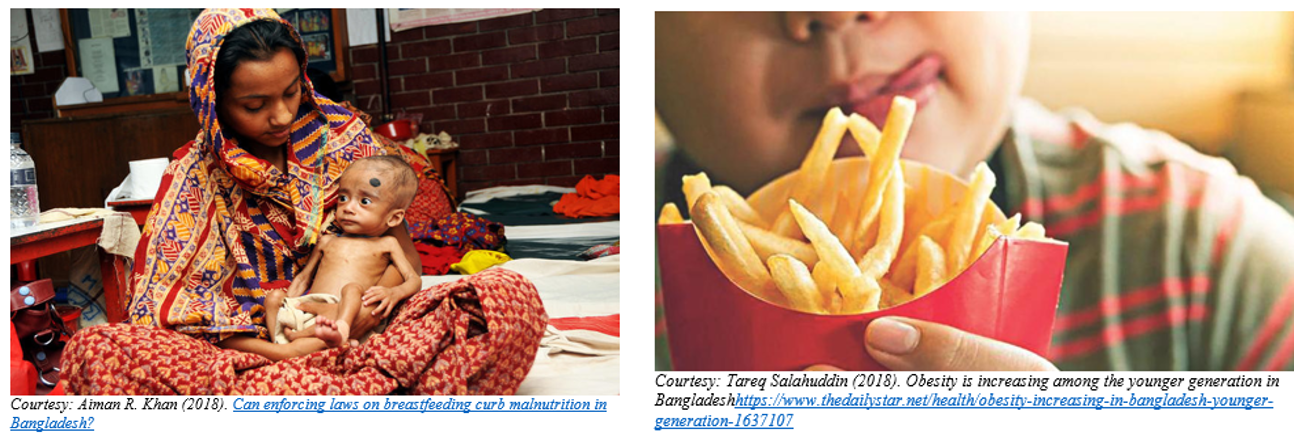
 The growing popularity of packaged snacks, sugary beverages, and heavily marketed convenience foods is creating a new public health challenge. Despite persistent micronutrient deficiencies, the prevalence of overweight and obesity continues to increase, creating a double burden of malnutrition characterized by the coexistence of undernutrition and overnutrition (a form of malnutrition resulting from excessive energy and nutrient intake) within the same populations, communities, households, and even individuals.
Declining rates of exclusive breastfeeding and increasing reliance on bottle-feeding further compound these risks, particularly among infants and young children.
The maternal link
No discussion of child nutrition can be complete without addressing maternal health. A significant proportion of pregnant women in Bangladesh continue to suffer from anaemia and other nutritional deficiencies. Poor maternal nutrition increases the likelihood of low birth weight, impaired foetal development, and long-term health complications for both mother and child.
Although progress has been made in reducing child marriage, adolescent pregnancies remain a concern. Young mothers often enter pregnancy with inadequate nutritional reserves, perpetuating an intergenerational cycle of malnutrition and poverty.
Breaking this cycle requires investment in adolescent nutrition, reproductive health education, maternal healthcare services, and social support systems that empower women to make informed decisions about their health and well-being.
Nutrition for change: Transforming awareness into action
Amid these challenges, civil society organizations are playing an increasingly important role in bridging the gap between nutrition knowledge and community action. One notable example is Nutrition For Change, a Bangladesh-based organization dedicated to promoting evidence-based nutrition education, public awareness, and sustainable behaviour change.
Nutrition For Change works to empower individuals, families, and communities with practical knowledge about healthy eating, maternal and child nutrition, disease prevention, and lifestyle management. Through educational campaigns, professional training programmes, community outreach activities, and digital awareness initiatives, the organization seeks to make nutrition information accessible to people from all socioeconomic backgrounds.
A key strength of Nutrition For Change lies in its commitment to translating scientific nutrition research into simple, culturally relevant messages that can be applied in everyday life. By engaging healthcare professionals, nutritionists, educators, students, and community leaders, the organization helps build local capacity for addressing malnutrition and nutrition-related diseases.
The organization also advocates for preventive healthcare approaches, emphasizing that nutrition should not be viewed solely as a treatment strategy but as a fundamental pillar of national development. Through workshops, awareness programmes, consultations, and partnerships, Nutrition For Change contributes to creating a healthier and more informed society capable of making sustainable dietary and lifestyle choices.
As Bangladesh confronts emerging nutrition challenges ranging from childhood malnutrition to obesity and environmental health risks, organizations like Nutrition For Change demonstrate how grassroots engagement and public education can complement government policies and strengthen national nutrition outcomes.
A call for nutrition-smart governance
The evidence is clear: Bangladesh remains off-track in achieving several nutrition-related Sustainable Development Goals by 2030. To reverse current trends, policymakers must adopt a more comprehensive and integrated approach.
- Environmental health as nutrition
Lead contamination, unsafe water, and environmental toxins should be recognized as core nutrition issues. Nutritional interventions alone cannot compensate for the developmental damage caused by environmental hazards.
- Regulating the food environment
The growing influence of ultra-processed foods demands stronger regulatory action. Policies should promote healthier food choices while restricting misleading marketing practices targeting children and families.
Stricter oversight of breast-milk substitute advertising and improved front-of-package labelling could help consumers make more informed decisions.
- Localized nutrition budgeting
Nutrition challenges vary significantly across regions. Climate-vulnerable coastal communities face different risks than urban slums or remote rural districts. Localized nutrition planning and budgeting can ensure resources are directed where they are needed most.
District-level nutritional profiling and data-driven interventions should become central components of future nutrition policy.
Bangladesh’s future will not be determined solely by economic growth rates, infrastructure projects, or technological innovation. It will also be shaped by the nutritional status of its children during the first 1,000 days of life.
If acute malnutrition continues to rise, environmental toxins remain unchecked, and unhealthy dietary patterns become entrenched, the country risks undermining decades of human development progress. Conversely, investing in maternal health, child nutrition, environmental safety, and public awareness can unlock enormous social and economic benefits.
The challenge before us is clear: we must move beyond the rice bowl and build a nutrition system that nourishes not only survival but also human potential. Every child deserves the opportunity to grow, learn, and thrive. Ensuring that the future is not merely a health imperative it is a national responsibility.

Raisa Mehzabeen
Raisa Mehzabeen is a nutritionist and fitness trainer. She is Founder Chief Executive Officer, Nutrition For Change. She Campaigns against localized nutritional disparities and for building structural awareness surrounding foundational physical health rights. Raisa believes that systemic change begins with individual awareness. Her activism is rooted in structural community engagement, translating strategic leadership into lasting social movements. Raisa holds BSc (Honours) degree in Food & Nutrition from the University of Dhaka; MPH (In Progress), North South University; PGT in Nutrition and Fitness, Inspiron Fitness and Diet Consultancy Centre.