A Life Devoted to Knowledge, Liberation and Human-Centred Development
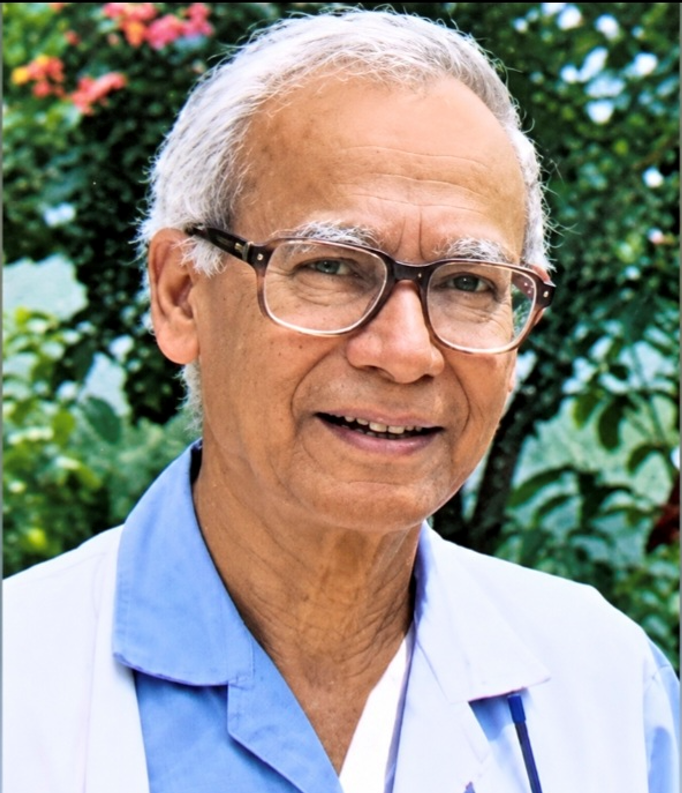
Batch ’49 | Economist | Freedom Fighter | Development Thinker | Cultural Enthusiast
“Knowledge finds its highest purpose when it serves freedom, justice and humanity”
Some lives are remembered for their achievements; a rare few are remembered for the values they leave behind.
Professor Dr. Mohammad Anisur Rahman belonged to the latter category. An eminent economist, educator, freedom fighter, cultural enthusiast and pioneering development thinker, he devoted his extraordinary life to knowledge, freedom, justice and the dignity of ordinary people.
For the Gregorian community, he was more than a distinguished alumnus. He was a proud representative of the intellectual tradition of St. Gregory’s High School, Dhaka—a tradition founded on academic excellence, intellectual curiosity, discipline, leadership and service to society.
His remarkable journey took him from the classrooms and playing fields of St. Gregory’s to the University of Dhaka and Harvard University; from the intellectual struggle against economic inequality in Pakistan to the Liberation War of 1971; from the reconstruction of a newly independent Bangladesh to the international discourse on participatory and people-centred development.
His life was, in many ways, a journey from knowledge to action.
The making of a distinguished Gregorian
Born in Brahmanbaria in 1933, Anisur Rahman came from an intellectually accomplished family. His father, Mohammad Hafizur Rahman Hafiz, was a brilliant economist and a member of the Bengal Civil Service. Growing up in an environment that valued education, scholarship and public service, young Anisur developed an enduring passion for learning and social responsibility.
He entered St. Gregory’s High School in 1941. Although his father’s transferable government service later took him to schools in Calcutta, he returned to St. Gregory’s after Partition and continued his education there.
He passed his matriculation from St. Gregory’s in 1949, becoming part of the school’s celebrated Batch ’49.
At St. Gregory’s, his talents extended well beyond the classroom. He was an accomplished sportsman, particularly in football. Playing as a right-out for the school team, he earned considerable recognition at a time when St. Gregory’s was one of the country’s strongest school football sides. Remarkably, while still a student, he also played for the renowned Azad Sporting Club.
His sporting excellence continued at Dhaka College, where he captained the football team.
At the University of Dhaka, he emerged as one of the most versatile students of his generation. He participated in football, cricket, tennis, badminton, table tennis and chess. He played cricket as a wicketkeeper and batsman, reached the quarter-finals in lawn tennis and became Fazlul Huq Hall Table Tennis Champion for three consecutive years.
In 1954, he was elected Vice-President of the Fazlul Huq Hall Students’ Union, demonstrating the leadership and popularity he had already earned among his peers.
«A student-athlete, scholar and leader—his formative years already revealed the breadth of the personality he would become.»
An economist with a humanist’s heart
Professor Anisur Rahman pursued higher studies in Economics at the University of Dhaka and Harvard University, and later taught at the University of Dhaka and the University of Islamabad.
During the 1960s, as economic disparities between East and West Pakistan became increasingly severe, he emerged as a powerful intellectual voice for economic justice. Working alongside distinguished economists such as Rehman Sobhan and Nurul Islam, he analysed the structural inequalities in Pakistan’s economy and advocated a more equitable distribution of national resources.
Their research and arguments helped provide an important economic foundation for the historic Six-Point Programme, which became a defining milestone in the struggle for Bengali political and economic autonomy.
In his “East and West Pakistan: A Problem in the Political Economy of Regional Planning” (Occasional Papers in International Affairs, No. 20. Harvard University Center for International Affairs, July 1968), Anisur Rahman analysed various facets of regional disparity between East and West Pakistan and traced their root causes. He then suggested “an approach to a policy for dealing with the problem of regional disparity in the country, one which would impose the least sacrifice to the national objective” by applying his model for “Regional Allocation of Investment”, published in the February 1963 issue of the prestigious Quarterly Journal of Economics.
In 1967, Anisur Rahman published, “The Welfare Economics of Foreign Aid”, challenging the dominant view that foreign aid supplements domestic savings. Using mathematical modelling and data from Pakistan, Anisur Rahman convincingly demonstrated, “With the easy, institutionally determined terms at which foreign aid is being made available, many countries will find an appeal for maximum self-help, in their self-interest, unconvincing”. Important corollaries follow, such as a low-tax GDP ratio, low foreign direct investment, which we see in Bangladesh. With such easy availability of foreign aid, a country can have both high growth and consumption as long as the donors see the country as compliant to their social and geo-political goals. In short, foreign aid compromises recipient countries’ policy independence and economic sovereignty.
For Anisur Rahman, economics was never merely an academic discipline. Behind every statistic, policy and economic indicator, he saw human beings and their aspirations.
This human-centred approach would become the defining characteristic of his later work.
He gradually moved beyond the conventional boundaries of economics and began asking a more fundamental question:
«What kind of development genuinely improves the lives of ordinary people?»
The answer would shape his intellectual contribution for decades to come.
A voice of warning before the liberation war
One of the most remarkable chapters of his life unfolded in the days immediately preceding Bangladesh’s Liberation War.
By March 1971, Professor Anisur Rahman had become convinced that the Pakistani military authorities were preparing a devastating crackdown on the people of East Pakistan.
According to his autobiography, Pathe Ja Peyechhi (What I Have Found Along the Way), he sent urgent telegrams to approximately 150 intellectuals and influential personalities around the world.
His warning was brief but chilling:
«“GENOCIDE IN BANGLADESH IMMINENT. DO WHAT YOU CAN.”»
Among the recipients were international academics and public intellectuals, including the renowned French philosopher Jean-Paul Sartre.
At a time when the outside world had yet to fully grasp the impending catastrophe, Anisur Rahman tried to raise an international alarm.
His action reflected one of the defining characteristics of his personality: he understood that intellectual responsibility did not end with analysis.
When history demanded action, he acted.
Surviving the night of 25 March
On the night of 25 March 1971, when the Pakistani army launched Operation Searchlight, Professor Anisur Rahman was living in the Dhaka University Teachers’ Quarters.
He witnessed the terrifying assault on the university area and Jagannath Hall. Gunfire, screams, breaking doors and the movement of soldiers through the residential quarters transformed the university campus into a scene of unimaginable horror.
Several prominent members of the university community, including Professor Jyotirmoy Guhathakurta and Professor Govinda Chandra Dev, became victims of the military operation.
Professor Anisur Rahman narrowly escaped with his wife and two daughters. His later recollections of that night remain a deeply personal account of one of the darkest moments in Bangladesh’s history.
The experience would leave an indelible mark on his understanding of freedom, violence, society and human dignity.
From the struggle at home to the world stage
Following the military crackdown, Anisur Rahman and fellow economist Rehman Sobhan escaped from Dhaka under assumed identities.
Anisur travelled under the name “Abdur Rashid”, while Rehman Sobhan used “Din Mohammad.”
After reaching India, they established contact with the renowned economist Amartya Sen, who helped facilitate meetings with influential Indian policymakers, including Dr. Ashok Mitra and P. N. Haksar, advisers to Prime Minister Indira Gandhi.
Later, with the approval of Prime Minister Tajuddin Ahmad, Professor Anisur Rahman travelled to Harvard University.
There, he used his academic standing and international network to mobilise intellectual support for Bangladesh’s independence.
His contribution to the Liberation War, therefore, extended far beyond the conventional idea of a battlefield. His arena was the world of ideas, evidence and international opinion.
He fought with scholarship, conviction and the power of international intellectual solidarity.
Helping build a new Bangladesh
After Bangladesh achieved victory in December 1971, Professor Anisur Rahman returned home and resumed teaching at the University of Dhaka.
Soon afterwards, Bangabandhu Sheikh Mujibur Rahman invited him to join Bangladesh’s first Planning Commission.
Working with Bangabandhu, Prime Minister Tajuddin Ahmad and other policymakers, he contributed to the enormous task of rebuilding a war-ravaged nation and establishing the foundations of its new economy.
The experience profoundly influenced his subsequent intellectual journey.
The challenge of rebuilding an impoverished, war-torn country forced him to confront a fundamental question:
«What kind of development could truly transform the lives of ordinary people?»
His answer would shape much of his later intellectual career.
A pioneer of participatory development
The Liberation War changed Professor Anisur Rahman’s understanding of development.
Gradually, he moved beyond conventional, top-down economic thinking and became an internationally recognised advocate of participatory and people-centred development.
He believed that ordinary people should not merely receive the benefits of development; they should actively participate in shaping it.
His ideas concerning self-reliance, grassroots empowerment and people’s participation earned international recognition and influenced scholars and development practitioners in many parts of the world.
He challenged the conventional development model in which experts designed programmes and communities simply became their recipients.
Instead, he argued for a development process in which people themselves became active agents—identifying their needs, mobilising their resources, sharing their knowledge and determining the direction of their own development.
«“Development must be created with people, not merely delivered to them.”»
This principle became one of the most enduring contributions of his intellectual legacy.
The scholar beyond economics
Professor Anisur Rahman gradually transcended the boundaries of conventional economics.
His writings explored the relationship between economics, psychology, culture, human behaviour and development.
His development philosophy placed particular emphasis on self-reliance, people’s own knowledge and a holistic understanding of development.
His published works included Apohrita Bangladesh, Participation of the Rural Poor in Development, Participatory Action Research: Learning from the School of Life, My Story of 1971, and Pathe Ja Peyechhi, among others.
His intellectual journey therefore moved beyond the conventional boundaries of economics and towards a broader understanding of human development.
At the heart of his thinking was a profound belief in the capabilities of ordinary people.
The cultural side of a scholar
Alongside economics and public affairs, Professor Anisur Rahman maintained a lifelong affection for music and the arts.
His love of music was influenced by his mother and his celebrated aunt, legendary singer Firoza Begum.
He performed as a singer and acted in Rabindranath Tagore’s Tasher Desh, directed by eminent cultural personality Kalim Sharafi.
His enduring love for Rabindra Sangeet reflected the cultural depth and humanistic spirit that complemented his intellectual life.
He later became recognised not only as an economist and development thinker but also as a practitioner, researcher and exponent of Rabindra Sangeet.
His engagement with Tagore’s music was not simply an artistic pursuit. It reflected his broader humanistic worldview—a belief in creativity, freedom, beauty and the development of the whole human being.
In 2004, he received the Rabindra Puraskar for his contribution to Rabindranath Tagore’s music and literature.
Pathe Ja Peyechhi: A personal and historical record
His autobiography, Pathe Ja Peyechhi, is much more than a memoir.
It is a valuable record of the political, social and intellectual transformation of Bengal and Bangladesh.
Through his personal experiences, the book offers insights into the Language Movement, student politics, the Six-Point Movement, the Liberation War and the birth of Bangladesh. It also contains reflections on many of the personalities who shaped the country’s history.
For future generations, such first-hand accounts are invaluable—not simply because they preserve facts, but because they capture the human experience behind history.
In Pathe Ja Peyechhi, personal memory and national history come together.
The reader encounters not merely events but also the emotions, dilemmas, relationships and choices that shaped the experience of a generation.
It is this human dimension that makes the memoir especially valuable.
A life of intellectual integrity
Professor Anisur Rahman’s intellectual journey was remarkable not because it remained within one discipline, but because it continually expanded.
Economics led him towards questions of inequality.
The Liberation War led him towards questions of freedom and national reconstruction.
Development work led him towards participation and self-reliance.
Music and literature led him towards questions of culture and human fulfilment.
Across these apparently different fields ran a common thread:
The dignity and agency of human beings.
He believed that development without participation could become paternalistic; economic growth without justice could deepen inequality; education without social responsibility could become sterile; and freedom without human dignity could remain incomplete.
His life was therefore an integrated intellectual and moral journey.
Recognition and legacy
In recognition of his contribution to the Liberation War, Professor Dr. Mohammad Anisur Rahman was honoured by the Muktijoddha Shiksha Samman Parishad on 26 December 1996, during the Silver Jubilee celebrations of Bangladesh’s independence.
He received the Rabindra Puraskar in 2004 for his contribution to Rabindranath Tagore’s music and literature.
His contributions as an economist, educator, development thinker, freedom fighter and cultural personality earned him respect both at home and internationally.
He remained throughout his life committed to intellectual integrity, social justice, democracy and human dignity.
On 5 January 2025, Professor Dr. Mohammad Anisur Rahman passed away, leaving behind an extraordinary legacy.
He was an economist who challenged inequality, a teacher who inspired generations, a freedom fighter who stood for his country, a cultural enthusiast who embraced the arts, and a visionary thinker who placed people at the centre of development.
A distinguished Gregorian
For the Gregorian community, his journey—from the playing fields of St. Gregory’s to the intellectual world of Harvard, from the perilous days of 1971 to the global discourse on participatory development—is a source of profound pride.
He represented the best of the Gregorian tradition: intellectual curiosity, academic excellence, leadership, cultural awareness and a commitment to society.
The young student who played football for St. Gregory’s and Azad Sporting Club would become a scholar whose ideas travelled across continents.
The university student who excelled in multiple sports and represented his peers would become an economist, planner and development thinker.
The teacher who witnessed the violence of 25 March 1971 would become an advocate of a development philosophy centred on people, participation and self-reliance.
His life demonstrates how education can become a force for national service and human liberation.
For Bangladesh and for future generations
For Bangladesh, Professor Dr. Mohammad Anisur Rahman remains an important figure in the nation’s economic, intellectual, cultural and liberation history.
For the Gregorian community, he remains a distinguished son of St. Gregory’s.
And for future generations, his life carries a timeless message:
«“Knowledge finds its highest purpose when it serves freedom, justice and humanity.”»
Professor Dr. Mohammad Anisur Rahman may have left this world, but the ideas he championed and the values he lived by continue to illuminate the path towards a more just, self-reliant and humane society.
His greatest legacy may ultimately be found not in the positions he held or the honours he received, but in the enduring conviction that people must remain at the heart of development, that knowledge carries a responsibility to society, and that freedom becomes meaningful only when it advances human dignity.
May his memory remain a source of inspiration for generations of Gregorians and Bangladeshis alike.

Mustaque Kamal Tuhin
A Bangladeshi columnist who writes on the Liberation War, history, heritage, and notable personalities of Bangladesh.
Sources & Acknowledgements
Sources:
Professor Dr. Mohammad Anisur Rahman’s Pathe Ja Peyechhi and My Story of 1971; Liberation War Museum Archives; and published biographical accounts in The Daily Star, bdnews24.com, UNB, BSS, Research Initiatives, Bangladesh (RIB), and Centre for Policy Dialogue (CPD).
Acknowledgements:
The author gratefully acknowledges Professor Dr. Mohammad Anisur Rahman’s autobiographical works, archival materials, published accounts, and the contributions of scholars, researchers and members of the Gregorian community whose recollections and documentation have helped preserve his remarkable life and legacy.