In March 2026, I participated virtually in the First International Conference on Social Capital, organized by the International Social Capital Association held in Dubai. This write-up draws on my paper, “The Role of Social Capital in Intergenerational Mobility in an Age of Rising Inequality of Opportunity with Special Reference to Bangladesh,” as well as insights from keynote speeches delivered by Raj Chetty and Robert Putnam. My write-up illustrates how declining social capital, widening inequality, and weak institutional structures interact to shape lack of opportunities for upward mobility in Bangladesh.
Understanding social capital
Mainstream economic models often emphasize the role of physical capital in economic growth. However, in recent years, social scientists, including economists have recognized the importance of social capital in sustainable economic development. It is instructive to highlight some conceptual issues concerning social capital. Over several decades, many social scientists have explored the concept of social capital from various perspectives. Coleman (1988), from a micro-level perspective, interprets social capital in terms of a set of resources embedded in social relationships in family and community settings. According to Coleman, social capital entails a public good character with externalities that benefit not only members but also non-members. Furthermore, from a functional and instrumental perspectives social capital, according to Coleman, can act as a catalyst to promote human capital and facilitate collective actions.
Putnam (1995, 2000) takes a macro-level perspective and interprets social capital in terms of social norms, trust, and civic engagement. In his keynote speech (2026), he highlights the decline of social capital, political comity, cultural solidarity, and equality of opportunity in the United States since the 1980s.
Bourdieu (1986) highlights how social capital and other forms of capital such as economic capital and cultural capital are connected to power, inequality, and social reproduction. Furthermore, social capital may not be neutral or beneficial for all people. Social capital provides access to jobs, education, and power; however, social capital is unevenly distributed across classes and reproduces various forms of inequality across generations.
Chetty (2022, 2026) argues that social capital plays a crucial role in promoting intergenerational mobility. His research in the United States shows that cross-class interactions between low- and high-socioeconomic groups significantly improve economic opportunity.
Cross-class social interactions can be regarded as “bridging social capital”, which involves interactions among people belonging to dissimilar groups in terms of socio-economic status, religion, ethnicity, and language. In contrast, “bonding social capital” refers to social interactions involving people who belong to the same group. Increased inequality of income and wealth acts as powerful barriers toward bridging social capital and leads to socio-political polarization. Complementing these, linking social capital captures vertical relationships between individuals and institutions, particularly the state.
Intergenerational mobility can be absolute and relative. For example, absolute intergenerational mobility in education and income implies that children in their adulthood achieve higher levels of education and income compared to their parents. Relative mobility implies the degree to what extent the level of income or education of children is independent of their socio-economic status. The relative mobility shows the ability to move up the economic ladder, a universal aspiration.
In a study published by myself and Ashrafi (2020), we found, based on the World Bank data (2018) that, in Bangladesh, the vast majority of children from the bottom half are stuck in quartiles 1 and 2 while those in the highest quartile face low risks of falling down the education ladder. This is consistent with the existence of “sticky floors” and “sticky ceilings” (OECD, 2018). Sticky floors restrict movement of disadvantaged groups to higher rungs of the socio-economic ladder, while sticky ceilings protect richer groups from falling down the ladder.
Education is a major driver of intergenerational mobility. Bangladesh has made significant progress in absolute intergenerational mobility in education, especially for girls. However, relative intergenerational mobility is still low in Bangladesh, compared to rapidly growing countries such as China and Vietnam. This suggests that not only “glass-ceilings”, but also “class-ceilings” remain major barriers for upward mobility of girls in Bangladesh.
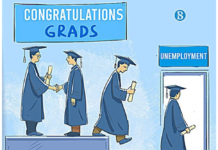
Intergenerational mobility in education is not fully translated into intergenerational mobility in income in Bangladesh. This is reflected in high unemployment rates among the educated youth in Bangladesh caused by imperfections in the capital and labour markets involving the public and private sectors. Allocation of jobs based on a corrupt-patronage or a quota system in the public sector is likely to act as a major barrier for intergenerational mobility in employment and income. A move to a meritocratic system coupled with support for disadvantaged groups, will promote intergenerational mobility in the long run.
The social capital landscape in Bangladesh
For Bangladesh, data on social capital and its various dimensions are very limited. The literature on social capital in Bangladesh is small. Some studies have examined the role of social capital in rural Bangladesh (Uddin, 2014; Islam & Alam, 2018; Joarder & Imtiaz, 2024). Some basic statistics on social and economic issues are presented for Bangladesh.
- The Gini coefficient of 0.5 (Bangladesh Bureau of Statistics,2022), which is a measure of inequality.
- Mobility Index, Rank, 78 out of 82 countries (World Economic Forum).
- Social Capital Index, rank, 87 out of 192 countries (Solability.com)
- Social Progress Index: rank, 125 out of 161 countries (socialprogress.org)
- Corruption Perception Index, rank, 150 out of 181 countries.
It appears that Bangladesh, characterized by high inequality, low mobility, high corruption, and low social capital, stands in the opposite spectrum of Nordic countries which are characterized by high social mobility, low inequality, low corruption, and high social capital.
I mention a few positive and negative observations concerning social capital in Bangladesh. In Bangladesh, because of the bureaucratic culture, a legacy of the British colonial period, opportunities for “bridging social capital” remain limited. For example, Officer’s Clubs serve only high government officials from the civil service and other autonomous and semi-autonomous institutions.
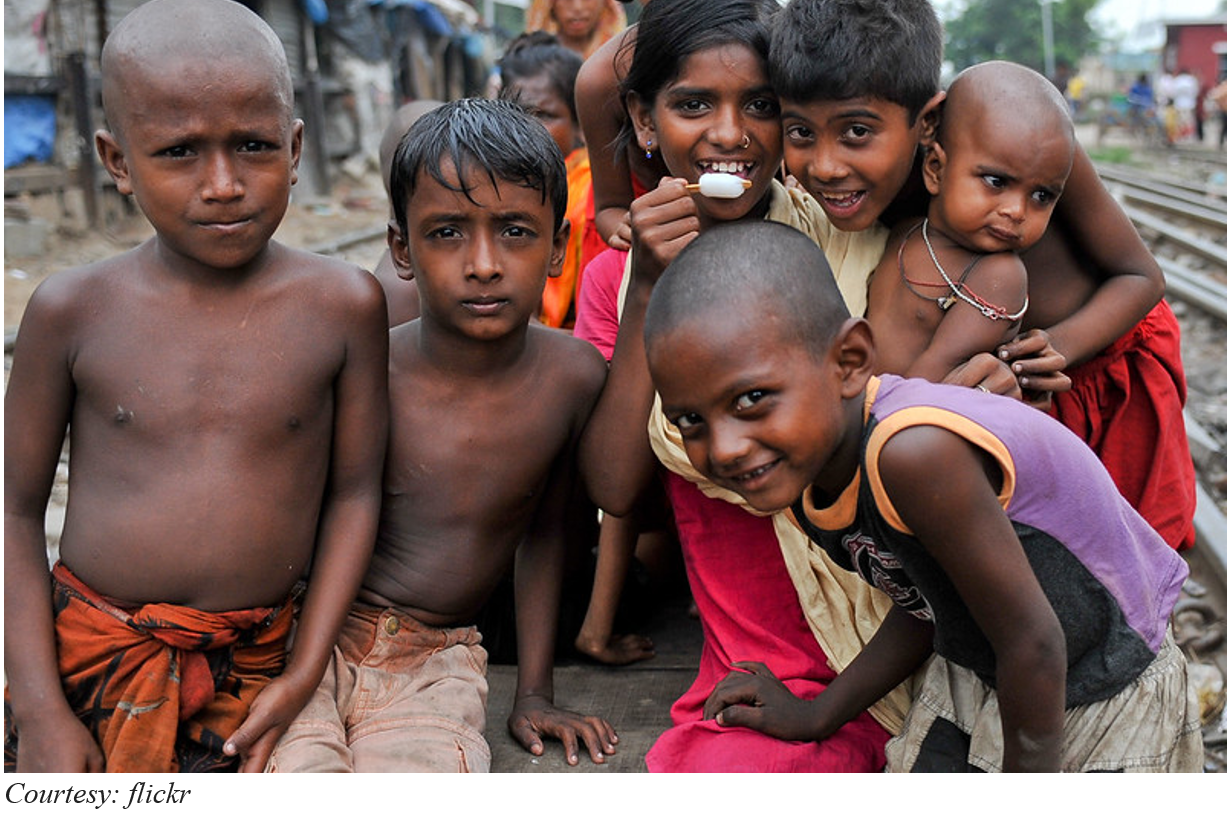
Once I visited a one-room elementary school for “out of reach children” in the Kurile slum near Mohakhali. When I asked the kids who wanted to become doctors and engineers, many of them raised their hands. Unfortunately, the harsh reality is that the odds of their transmutation to doctors and engineers are quite low. I saw a wall separating the slum area and the posh area of Mahakhali. The kids from the slum area were not allowed to attend the public schools in the posh area. Evidently, built-in- physical and “social walls” prevent cross-class interactions.
In my own village in the Chapai Nawabganj district, when I was a student in a primary school, there was a village library, and a playground where regular inter-village competition in soccer were held. Now a bazar has replaced the playground. The local library has disappeared as some of the members of the rural elite have migrated to urban areas. Out of four primary schools, only one has a small playground. The village still has no community hall. The standard of living has improved; however, the village society has become more individualistic with serious deficiency in “community goods and services.” Thus, the public sphere, as encapsulated by Habermas, (1989), where people get together to deliberate on collective issues, appears to have been squeezed.
In 2022, I, along with some members of an NGO, visited a primary school in a remote “Char” area in Chilmari, Kurigram, where the poverty level is very high. The school was in reality managed by only one teacher, although officially there were four teachers. The disparity in cognitive and non-cognitive skill development between students in this school and those attending elite schools in Dhaka is likely to be substantial. However, in Kurigram, I saw a contrasting positive example. I visited a well-established soccer club, thanks to the contribution of a local philanthropist. The club includes kids from all socio-economic backgrounds. The club not only provides training in soccer, but also promotes social capital, moral values and self-efficacy.
Erosion of social capital during the authoritarian period
During 2009-2024, Bangladesh witnessed pervasive corruption, weakening of democratic institutions, erosion of social capital, and social anomie ( Durkheim, 1997). In Bangladesh, social capital was unevenly distributed as highlighted by Bourdieu. Social capital existed within the ruling party members in a hierarchical and patron-client mode, which may be termed “unsocial capital.” These problems, in turn, generated a mass upsurge in 2024 that ousted the authoritarian regime. It remains to be seen whether Bangladesh moves to different trajectory that promotes social capital under the newly elected government.
The World Values Survey, Wave 7 (2018) reveals that 71% of participants in Bangladesh thought that Bangladesh needed major reforms; yet 54% had little or no trust in political parties. Furthermore, 68.6% of participants indicated that they had little or no trust in people belonging to different religions. The data also indicates a low density of social and cultural associations with active membership ranges from 3.4% to 7.2%. For instance, active membership in voluntary organizations, humanitarian organizations, and women’s organizations were 4.8%,3.5%, and 3.4%, respectively.
Rebuilding social capital in Bangladesh
Promotion of social capital requires concerted efforts by all stakeholders. Some measures are mentioned below.
- At the village/community level, collective efforts are needed to establish infrastructure for social capital such as playgrounds for kids, libraries, clinics, community halls.
- The government should give priorities to under-privileged areas in establishing high-quality public schools and health clinics. If necessary, the government should provide monetary and non-monetary incentives to teachers who serve under-privileged areas.
- A culture of mentoring and volunteering should be promoted especially at the high school level.
- Access to housing, education, and healthcare for workers and low-income households must be provided in urban areas.
- Growing privatization of education and healthcare poses a major barrier to promoting “bridging social capital”. The government must reverse this trend.
- Merit-based education and employment systems are better than corruption-based patronized system. However, merit-based system may perpetuate inequity in education and employment, unless a level-playing field is created by enhancing the abilities of kids with low socio-economic backgrounds.
Conclusion
Bangladesh stands at a critical crossroads. Rising inequality, weak institutions, and declining civic trust threaten the foundations of social cohesion and economic mobility. Yet the country also possesses important sources of resilience embedded in local communities, youth aspirations, philanthropy, and civic engagement. Rebuilding social capital will require not only economic growth, but also institutional reforms, inclusive public investment, and renewed commitment to meritocracy, civic trust, and equal opportunity. Without these reforms sustained development and social stability will remain elusive.
References
Durkheim, E. (1997). The division of labor in society (W. D. Halls, Trans.). Free Press. (Original work published 1893)
Bourdieu, P. (1986). The forms of capital. In J. G. Richardson (Ed.), Handbook of Theory and Research for the Sociology of Education (pp. 241–258). New York: Greenwood Press.
Chetty, R. (2026). Keynote speech at the First International Social Capital Association Conference(virtual) in Dubai, March 25.
Chetty, R., et al. (2022). Social capital II: Determinants of economic connectedness. Nature, 608(7921), 122–134.
Coleman, J. S. (1988). Social capital in the creation of human capital. American Journal of Sociology, 94, S95–S120.
Habermas, J. (1989). The structural transformation of the public sphere: An inquiry into a category of bourgeois society (T. Burger, Trans.). MIT Press. (Original work published 1962).
Islam,S., & Alam, K. (2018). Does social capital reduce poverty? A cross-sectional study of rural household in Bangladesh? International Journal of Social Economics, 45(11), 1515-1532.
Islam, S., & Ashrafi, H. (2020). Intergenerational mobility and inequality in Bangladesh and selected countries. Journal of Bangladesh Studies, 22(1), 45–62.
Joarder, S., & and Imtiaz,S. (2024. Social Capital of the Peasants in Bangladesh: Changes and Challenges. International Journal of Advanced Research (IJAR), 12 (05), 267-275. Narayan, A., et. al. (2018). Fair Progress? Economic Mobility across Generations around the World. Washington, DC: World Bank.
OECD. (2018). A Broken Social Elevator? How to Promote Social Mobility. Paris: OECD Publishing
Putnam, R. D. (2026). Keynote speech at the First International Social Capital Association Conference(virtual) in Dubai, March 26.
Putnam, R. D. (1995). Bowling alone: America’s declining social capital. Journal of Democracy, 6(1), 65–78.
Putnam, R. D. (2000). Bowling Alone: The Collapse and Revival of American Community. New York: Simon & Schuster.
Uddin, M. J. (2014). Microcredit and building social capital in rural Bangladesh – drawing the uneasy link. Contemporary South Asia, 22(2), 143–156. https://doi.org/10.1080/09584935.2014.899979
Sadequl Islam is a professor and former Chair of economics at Laurentian University, Ontario, Canada. He has an MA and a Ph.D. in economics from the University of Manitoba, Winnipeg. He also has an MA in economics from Dhaka University. His research and teaching fields include macroeconomics, international economics, applied econometrics, and the Chinese economy. His publications include many articles in scholarly journals and a book The Textile and Clothing Sector of Bangladesh in a changing World Economy published by the Centre for Policy Dialogue and the University Press. He was a visiting scholar at El Colegio de Mexico, University of Michigan (Ann Arbor), and the Centre for Policy Dialogue. E-mail: sislam@laurentian.ca