

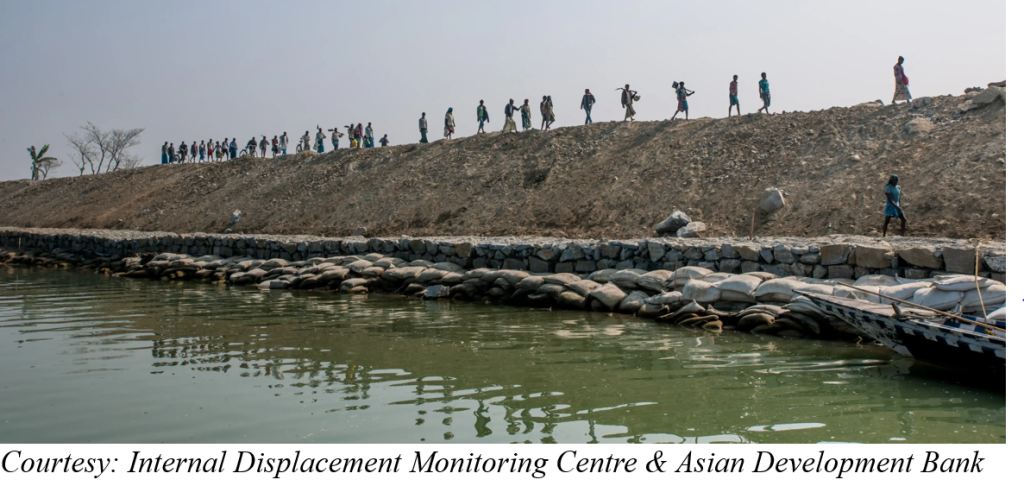
The context
I recently published a book titled Anatomy of Resettlement: Ethnographic Accounts and Stories in Retrospect (Bloomsbury Academic, 2025), which offers a retrospective look at my extensive international experience as a consultant across various Asian countries from 1990 to 2022. It is a sequel to my edited book (co-edited by Reshmy Nair and Shi Guoqing) titled Resettlement in Asian Countries: Legislation, Administration and Struggles for Rights (London: Routledge/Francis & Taylor, 2022).
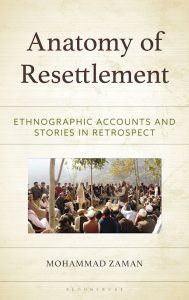 Anatomy of Resettlement examines the intricate realities of displacement and resettlement that emerge from large-scale infrastructure development projects supported by agencies such as the Asian Development Bank (ADB) and the World Bank (WB). Drawing on reflective storytelling, personal experiences, and in-depth ethnographic research, I examine the multifaceted nature of displacement and resettlement processes. My approach to ‘storying development’ centres on using narrative techniques to highlight both the obstacles faced and the insightful lessons gained through direct interaction with individuals and communities affected by development projects. In anthropology, storytelling serves as a vital method for amplifying the voices of marginalized groups and motivating people to deeply engage with meaningful learning experiences. Throughout the book, I reflect on my professional journey across various countries, focusing on everyday realities and diverse cultural backgrounds that shaped each narrative. My discussions of risks, community responses, traditions, and shared knowledge are grounded in direct fieldwork, immersive participant observation, and active collaboration with those impacted by the development processes.
My international work has taken me to many countries; however, I have used Bangladesh, China, India, and Pakistan as key case studies in this book. Within these countries, I examine a range of project sectors – including hydropower, irrigation, roads, railways, bridges, and flood control/river management etc. – offering in-depth accounts of each country’s historical context, project locations, and their unique characteristics. My narratives highlight both individual and collective interactions with affected communities, shedding light on realities faced on the ground. I discuss the progress achieved as well as the setbacks and challenges encountered, emphasizing the opportunities that emerged in the ongoing effort to accomplish successful resettlement fostering sustainable human, social, and economic development for the people and communities involved. The narrative paradigm thus captures the dynamic interactions over rather abstract arguments, becoming collective memory of the social and political challenges encountered during the work.
As an anthropologist, I deeply value the practice of self-reflection, weaving my personal insights into the broader tapestry of development work. From this perspective, I consider Anatomy of Resettlement not simply as a documentation of events, but as a form of ‘memoir’ – a narrative capturing my professional journey and the meaningful interactions I have had with communities across varied countries and cultural backgrounds. In fact, one peer reviewer of the manuscript described the book as “like a memoir,” noting its “engaging style [that] makes the book a pleasure to read…[with] innovative and reflexive style … virtually non-existent in the literature of this field.”
Another reader of the draft manuscript had remarked that the storytelling approach was a remarkably “powerful” technique, noting that the narratives embodied what is known in anthropology as “holism.” The reader also expressed his admiration for my willingness to embrace a distinctive style of writing, highlighting my “guts” in sharing personal stories that were both “relevant” and “integrated” into the context of the project work. The book, Anatomy of Resettlement, serves as a memoir, with stories related to resettlement and development practices encountered throughout my career.
Myths about memoirs
Is storytelling the same as writing a memoir? What exactly is a memoir? In broad terms, a memoir is a narrative that reflects on one’s own life experiences or records significant events from the perspective of someone with direct, personal involvement. This raises questions: Is an autobiography a type of memoirs? How do the two differ? In this brief essay, I discuss and clarify – following experts’ views on life writing – some frequent misunderstandings about memoirs, discuss the art and technique involved in crafting a memoir, and share select examples from my own work that, to me, represent the essence of a memoir.
There are several misconceptions about memoirs and life writing. Many people believe their lives are too ordinary—lacking remarkable events or stories worth sharing—and assume memoirs are reserved for the wealthy or famous. In reality, every person has a story to tell, and only you are truly qualified to share your own experiences. Stories serve as gifts to readers, and one does not need to be a renowned author or possess a formal writing background to write a memoir. Most importantly, no one needs permission to begin writing a memoir.
Unlike autobiographies, memoirs do not require a strict chronological order. While autobiographies aim to document one’s life comprehensively from birth to the present, memoirs focus on particular moments, themes, or aspects that may resonate with readers. An autobiography can be considered a form of memoirs, but its scope is generally broader and more centred on the author’s entire life. In contrast, memoirs offer writers considerable flexibility; an author may craft more than one memoir throughout their lives and navigate freely between different times and places, which lends the narrative a lively, engaging quality. For example, I am currently developing my second memoir in Bangla, provisionally titled Amar Smritikotha: Desh-Bidesher Golpo (My Memoir: Stories from Home and Abroad).
Memoirs are not solely about the author’s life. A compelling memoir often explores not just what happened, but how those experiences affected the author and led to personal growth or change. In this way, memoirs can address topics of broader public interest or universal themes. In memoirs, one emphasizes reminiscence centring around the author’s feelings and perspectives, rooted in memory and recollection. Frequently, memoirs reconstruct past events, offering readers an intimate glimpse into specific moments. Ultimately, memoirs enhance the craft of writing by inviting readers into captivating, engaging narratives that reflect both personal insights and broader human experiences.
Memoirs as windows into development: Glimpses from the fields
My fieldwork experience across Bangladesh, China, India, and Pakistan offered invaluable insights into everyday realities and challenges faced by individuals and communities. From remote tribal villages in Pakistan and floodplain communities along the Yellow River Basin in China shaped by hydropower projects, to small towns/villages in India transformed by roads/highways, and the communities near the Jamuna and Padma bridges in Bangladesh, each story I encountered reflects the intricate interplay of methods, cultural norms, and individual human experience. I briefly provide one or two examples from each country. Interested readers can find more in the book.
Bangladesh: Jamuna & Padma stories
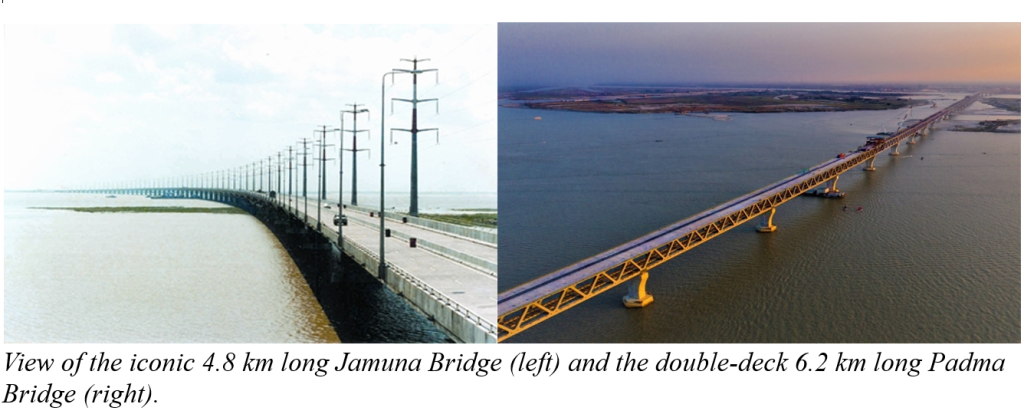
In Bangladesh, I worked on several projects, beginning with the Jamuna Bridge Project in the 1990s. The Jamuna project is recognized for its successful implementation of resettlement programmes, which featured numerous best practices, including fair compensation, well-developed resettlement sites with civic amenities, and ongoing support for both displaced individuals and host communities. While conducting the feasibility study for the Padma Bridge (2003–2005), our team held numerous consultations with villagers from the Mawa and Janjira sites, outlining the Jamuna “package” for compensation and resettlement of the people in the Padma Bridge Project. Yet, I noticed a clear sense of scepticism among the people, much of which stemmed from previous negative experiences with land acquisition during the construction of the Dhaka-Khulna highway in the early 1980s.
To address this prevailing distrust and demonstrate the actual achievements of the Jamuna Bridge Project, I organized an exposure trip for a group of 40 community and village leaders, elected officials, and representatives of those affected by the project. We visited the Jamuna bridge resettlement sites, allowing participants to witness first-hand the community infrastructure established as part of the resettlement initiative. During the visit, participants were free to explore the resettlement areas, engage in conversations with resettled villagers, and tour key civic amenities such as schools, mosques, and clinics. For many in the group, this was also their first chance to view the iconic Jamuna Bridge up close.
As the old saying suggests, “seeing is believing.” The exposure trip proved to be an extremely effective method for reassuring potential project-affected individuals about what they might expect from the Padma Bridge Project resettlement process. By witnessing the Jamuna resettlement sites first-hand, the visitors were able to verify the accuracy of my descriptions regarding best practices in compensation and relocation. Many participants expressed their satisfaction with the resettlement areas, particularly appreciating the civic amenities available. Following this visit, my role in subsequent consultation meetings at Mawa and Janjira became much easier; those who had toured the Jamuna sites readily shared their positive experiences, explaining everything to the rest of the community. The Padma Bridge Social Action Plan (2012), prepared during the detailed design, benefited from the Jamuna experiences and practices.
In Bangladesh, I was a ‘foreign’ consultant in my ‘native’ country. This dual identity was very helpful and I enjoyed it thoroughly. My status as a native specialist proved an advantage due to my language and understanding of the socio-cultural milieu. I was at ease working with the affected people and communities as ‘one of them’, speaking in my native Bangla language. This was extremely beneficial during surveys, interviews and stakeholder consultation meetings, as well as socializing with the affected villagers. However, in the project office, the local staff and officials treated me as a ‘foreigner’ or international consultant due to my status and position. Some of the officers even used to call me “Canadian Zaman” to distinguish me from the “Dutch Zaman” as there were two Zamans on the Consulting Team. My international colleagues liked my dual identity and found me very “resourceful” as a team member in project works in Bangladesh.
China: Dams as development
My initial experience as a consultant in China began in 1996. Over the years, I have contributed to various types of projects such as roads/highways, railways, flood management, and dam construction. China stands as the world’s leading builder of dams. While dams often present a variety of challenges, they are nonetheless integral to development, providing significant benefits in power generation, flood protection, and irrigation and water supply. In this section, I offer a brief overview of my field visits to three major dam sites—the Three Gorges, Xiaolangdi, and Danjiangkou Reservoir projects—which serve as illustrative examples of resettlement and social transformation in contemporary China.
The Three Gorges Project (TGP) on the Yangtze River is the largest hydropower project in the world, with an installed capacity of 22,500 MW. By the time the TGP was completed (1994-2010), over 1.3 million people were resettled in Hebei and other provinces. The task was not only to move and resettle displaced families, but the need for total economic restructuring and reconstruction of the region. I visited both rural and urban resettlement sites and local enterprises and new factories for resettlement workers, including women. The Xiaolangdi Dam on the Yellow River displaced 200,000 people. The resettlement programme was carried out in three phases, based on construction needs. We visited two resettlement sites; the first was the Xiwo Resettlement Village where people were moved some 30 years ago. It was initially harsh and difficult for the re-settlers; however, with new infrastructure such as housing, roads, markets, schools, and hospitals, the living conditions are now “perfect,” said one villager. “The children are growing up in much better conditions than us, and will have better future,” said another during our meeting.
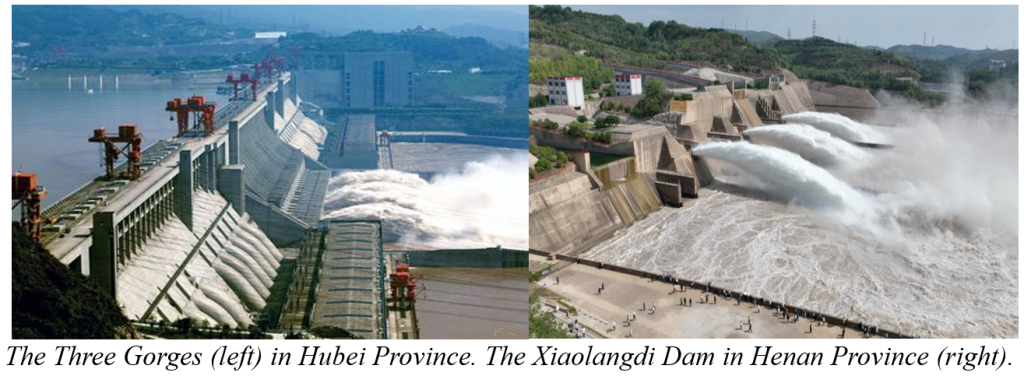
The second resettlement site we visited is called Xin Village. We met the Village Committee in the community Centre, where a health clinic and a medicine shop were also housed. We walked around the village and took pictures with re-settled families and children. We were told that many young women, after finishing high schools, are now employed in the service sector by private businesses in the town next to Xin Village. We also visited a third site with vineyard in a small greenhouse run by one of the resettled families.
India: Rural roads and flood control projects
I have many stories from my project work in India. I share two stories with the readers – one each from rural roads and the flood project in Assam. The Rural Roads Schemes were initiated in 2002 by Atal Bihari Bajpayee, then Indian Prime Minister, to connect all villages in rural India with access to markets, jobs, education and health services – all critical determinants of social development. I worked as an ADB staff consultants in Rural Roads Sector I (Madhya Pradesh and Chhattisgarh) and Sector II (Assam, Orissa and West Bengal) Projects.
I recall traveling in the summer of 2002 with Dr. Aqueel Khan, local consultant, in a car for three hours from the nearest town to a remote village in Madhya Pradesh. We travelled on a dirt road one-third of the time, perhaps about 20 kilometres from the nearest highway intersection. We saw some bicycles and bullock carts on our way to the village. On arrival, the village headman quickly organized a meeting. The village was fairly large with more than 1,000 households. Aqueel explained in Hindi the purpose of the trip. The village headman informed us that the local panchayat was aware of the prime minister’s rural road scheme and was waiting for the work to start.
During the meeting, the headman and others narrated some enduring difficulties villagers faced due to lack of paved roads, affecting their work, income, education for children, and access to medical help, particularly during emergencies. One person broke down in tears while reporting that his young wife died on the way to the city in the bullock cart during childbirth. Another person said that he had to take his daughter to a village near the highway for her marriage because “the groom’s party was not willing to take this gruelling journey for wedding, particularly in the rainy season.” In 2002–3, nearly three-quarters of the population in Madhya Pradesh and Chhattisgarh lived in rural areas, the majority of them suffering from the lack of a long-demanded all-weather road connection. Poverty levels in these two states were among the highest in the country.
In Assam, flooding and riverbank erosion caused by the Brahmaputra River are persistent challenges, much like the situation in Bangladesh downstream, where the river is known as the Brahmaputra-Jamuna. Having previously worked on a similar project on the Bangladeshi side, the ADB invited me to contribute to the upstream efforts in Assam. I was pleased to accept, given my extensive background in flood disaster research. The flood project was designed within the backdrop of the 2004 devastating floods in Assam. In 2006, the ADB assistance first focused on identifying project sites, followed by project design. All four subprojects – namely, Palasbari, Dibrugarh, Kaziranga and Matmara – included both structural and non-structural interventions for flood control, mitigations and enhancement of livelihood for the displaced families. Dr. Aqueel Khan was also independently hired by the ADB to work with me in this project.
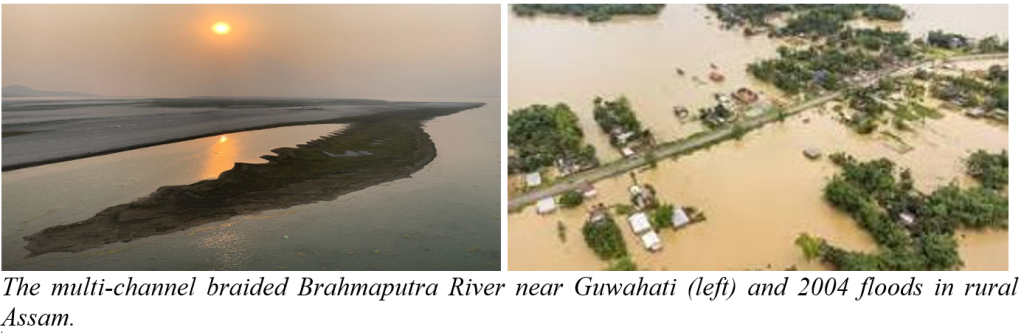
We arrived in Guwahati in December 2007. Aqueel Khan and I spent a couple of days walking up and down the sections of the existing embankments built by the Water Resources Department, Government of Assam, in the past years for flood control in the subproject area. In some sections, we found retired embankments built due to breaches and/or the failure of existing embankments during high floods. We conducted informal interviews with people inside the protected embankment as well as with those living on the embankment as informal settlers, after having lost their lands and homes due to flood and erosion. The embankment was dotted with such settlements of poor and displaced families.
During one of the days of our visit, a major chunk of the bank line slumped into the river in front of us and was quickly washed away by the current. “This is an everyday experience,” said one villager. The majority of households we talked to reported agriculture to be their main source of income, with livestock, fishing, wage labour, and seasonal migration for work as secondary sources to support and sustain their families. Some also reported urban employment such as jobs in government offices, businesses, or the private sector.
We met a tribal hunter at the Kaziranga site with bows and arrows on his shoulder. He was returning home from his hunting trip. For me, it was a very fascinating encounter. We greeted him and inquired about his hunt. He smiled and said, “not very much; only some birds.” The birds were hanging upside down on a wooden stick on his shoulder; some were still alive. When asked about his village, he showed us with his right hand directing to the village, that was not too far. Aqueel Khan and I decided to walk with him to the village. As we arrived, we saw scattered homes in rows, built on wooden stilts with open space area underneath used as shelters for livestock. They call them “Mising” people, and their economy is more agro-based, supported by fishing, timber/wood gathering and limited hunting.
We witnessed the same story repeating in Matmara; however, those living along the Brahmaputra seemed rely more on fishing than agriculture. In Matmara, we were told that Mising means “man of the water” – so they call themselves “people of the river.” During our field trip, we found many fishing boats anchored around the char (shifting island/sand spits) villages. “The river makes or breaks our lives,” said one fisherman, emphasizing the role of the Brahmaputra River. “The interventions in the past have not helped us or improved our living conditions,” said another.
Pakistan: Dam building as a development model
Since the early 1960s, dam construction has played a pivotal role in Pakistan’s economic development, beginning with the Mangla Dam and followed by the Tarbela Dam Projects and others. To emphasize the crucial role of dams in Pakistan’s development, the Water and Power Development Authority (WAPDA) launched the “Decade of Dams” initiative and unveiled a dedicated logo to promote this campaign.
For many, the development of new dams is seen as a major source of prosperity and a lifeline for the country’s socioeconomic advancement. Hydropower projects and dams offer low-cost, clean, and renewable energy solutions, making them crucial for Pakistan’s ongoing efforts to expand water reservoirs and hydropower capacity along the Indus River system. The Dasu Hydropower Project and the Diamer Basha Dam in the upstream of Dasu, both currently under construction, are integral elements of a cascading strategy to enhance power generation throughout the Indus River basin.
I have worked on the Dasu Hydropower project for over 10 years now, starting from the detailed design stage in 2012. The dam is located in Kohistan, a tribal district in Khyber Pakhtunkhwa – formerly known as the NWFP (North West Frontier Province). It is very remote and inaccessible – about 350 km north of Islamabad, on the Karakoram Highway (KKH), the road link between Pakistan and China. The project detailed design started in 2010-11, with an installed capacity of 4.320/mw in two Stages. Although implementation started around October 2015, the project experiences significant delays due to problems with land acquisition, Covid-19 pandemic, and some major security/terrorist incidents leading to deaths of Chinese workers on site. It is expected that Stage I (2,160/kw) of the dam will be operational 2027-28.
In Kohistan, people are divided along ethnic, religious and tribal lines. The tribal communities in Kohistan have enjoyed relative autonomy as small “republics” during the British colonial time. Following independence in 1947, they were administered by the Provincially Administrated Tribal Areas (PATA) that provided power and authority to local maliks/tribal leaders for administration and justice through their traditional jirgas (tribal councils). Thus, the Kohistani tribes have always been very powerful and the writ of the Pakistani government historically remained largely weak in this region. The maliks, ulemas (religious leaders) and pesh imam (prayer leader) wield considerable influence over local opinion. The district administration lends due consideration to jirga decisions and fatwas (religious sermons) by ulemas.
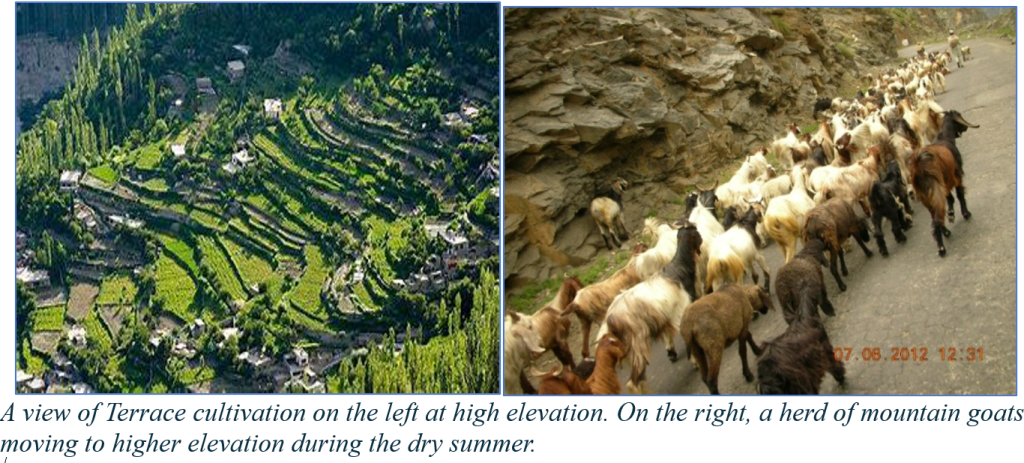
Kohistanis are largely pastoralists. Seasonal migration is very common in Kohistan for a variety of reasons – the main one is climate and availability of food and fodder for their livestock at various elevations in the hills. For most Kohistanis, seasonal migration up and down the high mountains is a way of life and the migration cycle is integrated with their pastoral economy supplemented by terrace agriculture and collection of non-timber forest produce at different elevations. Terrace cultivation and pastoralism characterize the local economy of Kohistan. Land is communally owned with clear demarcation of use rights. The Kohistani society is a highly patriarchal and conservative in which women are absent from public life. Purdah is strictly observed and women are rarely seen outside their homes. Even the entry of male first cousins into female areas of home will often be forbidden. Polygamy is very common; each married men has typically two or more wives and numerous children. Men make every effort to prevent their women from being influenced by the outside world and often resist changes in their lifestyles. Concepts of honour or izzat revolve around “zan, zar and zamin” (women, wealth and land) – the three things the Pashtuns are ready to protect and fight for when required.
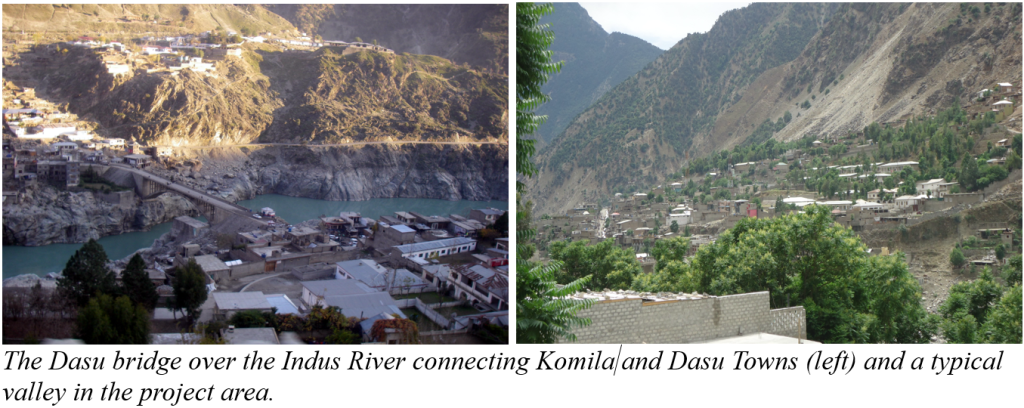
Given these circumstances, planning for resettlement and social development proved to be a complex and demanding endeavour. Over the course of roughly two years, we conducted extensive surveys and studies, held jirga meetings, and engaged in consultations with local maliks and other stakeholders. This collaborative process led to the creation of a comprehensive 14-volume Social and Resettlement Management Plan (SRMP), which addressed critical areas such as compensation, resettlement options, stakeholder consultation, grievance redressal, livelihood restoration, gender and public health concerns, in-migrant management, and local area development and community support programmes.
Our planning approach featured several innovative elements. Notably, we offered affected individuals the choice of relocating to resettlement villages situated on higher elevation or opting for self-relocation within project areas, neighbouring towns and cities down country. The SRMP treated resettlement as an opportunity for development, aiming to enhance the overall quality of life for people living in these remote hill communities. For gender and social development, our team adopted a gradual strategy anchored in meaningful consultations and fostering a sense of ownership among community members for the planned interventions. This approach was further supported by rigorous training and capacity-building programmes for team members, maliks (tribal leaders), ulemas (religious leaders) and imams (leaders of local mosques) ensuring that the project’s social goals were both contextually sensitive, owned by local communities and leadership, and sustainably implemented.
The SRMP has been under implementation for ten years now (2015-2025). Despite initial struggles and delays, the implementation of the plans has progressed well in all fronts – from compensation to resettlement, livelihood/employment, training of ulemas and maliks for women’s health and education needs, and local area and community development programmes involving rural roads, street lights, water supply, sewerage, and sanitation and so on in the project area and other valleys as benefit-sharing programmes beyond the project area.
The Dasu Hydropower Project stands out for its innovative approaches to social design and resettlement, which have laid the foundation for a series of exemplary practices in managing the complex development programmes. Central to these efforts has been a respect for tribal customs, with project strategies designed to empower local communities and honour traditional forms of decision-making during the planning and resettlement processes. In practice, WAPDA and the project team maintained active engagement with local residents, ensuring that all social and resettlement concerns were addressed collaboratively and responsively.
Conclusion
The narratives and accounts, far from being mere anecdotes, are central to my memoir and serve as tangible examples of the larger themes concerning resettlement and development in the book. Further, the glimpses from the fields highlight the importance of reflexivity and interdisciplinary approaches in understanding and shaping the future of development itself.

Mohammad Zaman
Dr. Mohammad Zaman is an internationally known development/ resettlement specialist. He has worked in many major projects for the World Bank in Bangladesh and in other countries in Asia and Africa. Dr. Zaman’s most recent edited book (co-editor Mustafa Alam) is titled Living on the Edge: Char Dwellers in Bangladesh, Springer, 2021. E-mail: mqzaman.bc@gmail.com
