

While we continue to search for explanations for the barriers to free and fair governance in Bangladesh, it would not be inaccurate to surmise that much of our predicament ultimately arises from our own political conduct. Electoral processes in the subcontinent particularly in Bangladesh are repeatedly undermined and tarnished by the toxic political culture that has taken root over decades. As long as the conditions that enable such toxicity remain unaddressed, even the most refined electoral systems are unlikely to produce fair outcomes or good governance.
One quick way to understand the deeper ailments of our society is to observe the actions and choices of prominent reform advocates such as Nurul Haque Nur (VP Noor) and Jonayed Saki. Both have long projected themselves as relentless campaigners for political reform and the creation of a new political order. Yet their refusal to take the oath associated with the constitutional reform council and particularly Saki’s alignment with the Bangladesh Nationalist Party (BNP) appears to contradict the ideological positions they previously upheld.
These developments provide a glimpse into the complex sociology of politics in Bangladesh. Political behaviour is rarely shaped by ideals alone; it is also influenced by power dynamics, strategic calculations, and shifting alliances. What we observe among the educated political class represents only a narrow window into a much broader social reality.
Beyond the circles of political activists and intellectuals lies a vast segment of the population with low income and limited access to education. Their political choices are often driven less by ideological commitments and more by immediate economic concerns, social networks, and local power structures. Understanding this wider societal dynamic is essential if meaningful reform is to take root.
Understanding preposterous conduct
People’s behaviour often appears puzzling or even preposterous when judged solely through the lens of moral expectations. Yet individuals rarely act in isolation from their social and economic environments. Their choices are influenced by circumstances, pressures, incentives, and the structures within which they operate.
What may appear irrational or morally indefensible to one observer may, from another perspective, represent a response, however flawed to systemic inequalities, social marginalization, or political exclusion. Understanding this complexity is essential if societies are to move beyond simple condemnation and begin to grasp the deeper forces that shape people’s conduct.
Our inability to effectively identify and confront enabling conditions of injustice, inequality and corrupt practices may stem partly from the shallowness of our understanding and analysis. When societies focus solely on moral condemnation without examining underlying causes, they risk overlooking the systemic forces that perpetuate unethical conduct.
A deeper understanding, one that integrates insights from economics, sociology, politics, and psychology is necessary to decipher why individuals and groups behave in disparate ways. Only through such comprehensive analysis can societies move beyond symptoms and begin addressing the structural roots of malfeasance, injustice and inequality.
Roots of the present disorder
The prevailing anarchy is the cumulative result of years of a debilitating political order that served a self-interested political class, along with wealthy and educated elites. This system consistently privileged select segments of society while neglecting the vast majority, producing a deeply lopsided and unequal social structure.
In such a society, none of us can truly feel secure. When large sections of the population are left behind, struggling merely to make ends meet, their frustration and anger can erupt unpredictably, often on the slightest pretext. Persistent exclusion breeds instability that ultimately affects everyone.
If prosperity is not shared with ordinary citizens who labour daily just to survive, the consequences can be severe. Their accumulated grievances may well be directed toward those of us who enjoy relative comfort and privilege. A more equitable distribution of opportunity and resources is therefore not only a moral necessity but also essential for social stability and collective security.
The role of social and economic inequality
Societies marked by sharp inequalities: whether in income, education, literacy, or wealth often experience fragmented social realities. The privileged may enjoy stability, security, and access to institutions that protect their interests, while the vast majority of marginalized communities struggle with insecurity and limited opportunities.
Despite religious teachings and universal moral values, history repeatedly demonstrates that these moral frameworks alone are not sufficient to prevent injustice, corruption, and malfeasance. Societies across the world despite strong religious traditions and ethical philosophies continue to struggle with exploitation, injustice, inequality, and abuse of power. This reality suggests that moral instruction by itself cannot fully restrain human behaviour when powerful structural forces shape both incentives and opportunities for wrongdoing.
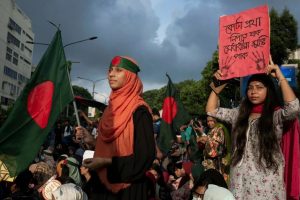 In such environments, the incentives that guide behaviour can diverge sharply. Some may pursue advancement through legitimate means, while others, facing systemic barriers may resort to opportunistic or unethical paths. These dynamics are further complicated by disparities rooted in politics, ethnicity, religion, and social status. Each layer of inequality contributes to shaping how individuals perceive justice, authority, opportunity and act in response.
In highly unequal societies such as Bangladesh, disparities in income, wealth, education, and access to opportunities can generate deep frustrations, resentment, and invidious social divisions. When such inequalities persist over generations, they shape sticky attitudes, aspirations, and behaviour in profound ways. Individuals living in vastly different circumstances often respond differently to similar situations because their life experiences and structural constraints differ dramatically.
While geopolitical conflicts and strategic interests often dominate public discourse, the deeper causes of malfeasance, injustice and inequality lie within the internal structures of societies themselves. Economic arrangements, social hierarchies, and political institutions create conditions that can either restrain or enable unethical conduct.
The challenge of governing a deeply unequal society
The profound inequalities and contradictions embedded in the socio-economic and political life of our nation make the task of politics and governance in Bangladesh extraordinarily difficult regardless of how well-intentioned political actors may be. Vast disparities in income, education, opportunity, and social status have produced a society that is highly stratified and complex.
Managing the affairs of such a society requires navigating competing interests, deep grievances, structural imbalances, and severe resource constraints, conditions that rarely lend themselves to simple policy solutions. The nation remains entangled in a profound socio-political and economic morass, which often compels governments to adopt policies fraught with moral hazard, thereby perpetuating a continuous and vicious cycle of short-term expediency and long-term structural stagnation.
Compounding this difficulty is the fact that many analysts and commentators come from educated and relatively elite backgrounds. As a result, their perspectives are sometimes disconnected from the complicated lived experiences of the diverse and demographically stratified segments of the population. Without a deeper understanding of how ordinary citizens, particularly those at the margins experience economic hardship, social exclusion, and political neglect, analysis and commentary can remain somewhat superficial and detached from the realities that shape the nation’s political life.
 The imperatives for deep reforms
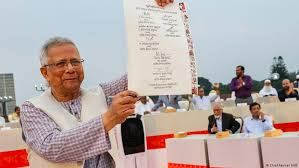
Reform, therefore, becomes the necessary starting point. In this context, the July Sonod (Charter) and its embedded reforms present perhaps the most viable vehicle and opportunity for initiating meaningful structural change.
Failure to implement the referendum-approved July Sonod, along with its structural, constitutional, and institutional reforms, would severely undermine the credibility and effectiveness of Tarique Rahman and his government. If reforms endorsed by the people are ignored or delayed, the administration risks appearing politically weakened and ultimately becoming a spent political force, much like the fate that befell the Awami League.
The supremacy of the people’s mandate
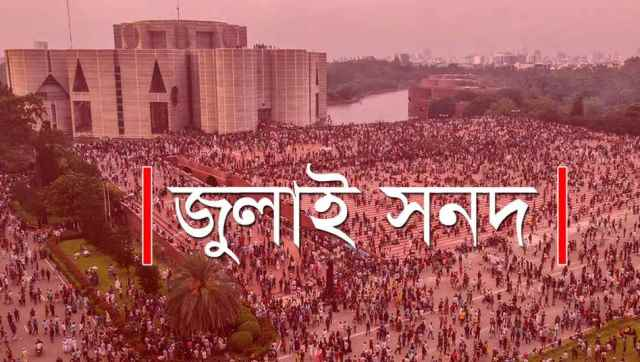 The legitimacy of the July Sonod flows directly from a public referendum and therefore reflects the sovereign will of the people. It now becomes the solemn obligation of any government in power to respect and implement that decision. Ignoring such a mandate risks eroding democratic credibility and weakening public trust in governance.
Figures such as Andalib Partho and Salauddin would be well advised to heed this unmistakable mandate. The will of the people, expressed through a referendum on the July Charter, constitutes the ultimate source of authority and legitimacy in any democratic order.
This age-old principle transcends the limitations or ambiguities of existing constitutional provisions. Where the constitution fails to reflect জনগণের aspirations, it is the sovereign will of the people expressed in the referendum that must prevail. Legitimacy, after all, flows not from documents alone, but from the consent and participation of the governed.
The July Sonod is expected to address many of our governance challenges. If implemented effectively, it could represent an important break from the festering and toxic political order of the past. By reforming institutions and setting clearer rules for political conduct, it may lay the groundwork for a more accountable and stable system of governance.
Members of Parliament must hit the ground running with concrete reform measures. There is no patience and time for dilly dally, shilly shally in the name of protecting the defunct 1972 constitution. The priorities should include institutional and governance reforms, as well as pragmatic economic and social development strategies. These policies must respond to the needs of the vast majority of citizens, particularly low-income and marginalized communities whose votes made this parliament possible.
Agitating in the streets is easy; governing a nation burdened with myriad problems is profoundly difficult. Protest movements can mobilize public anger and demand change, but translating those demands into workable policies, stable institutions, and economic recovery requires patience, competence, and political maturity.
Political reform and structural repair
Parliamentary sessions are serious affairs of statecraft. They are not meant to resemble a political rally at Polton Moydan. The nation expects its Members of Parliament to approach their responsibilities with sobriety, discipline, and a deep sense of duty toward the people they represent.
The people do not expect parliament to become a stage for lofty speeches, endless eulogies of party leaders, or the exchange of political pleasantries among rival factions. Such performances may serve partisan interests, but they do little to address the urgent challenges confronting the nation. What the country needs is purposeful deliberation and decisive action.
Let this parliament rise to the historic moment and become a truly people’s parliament, one devoted not to partisan theatrics, but to safeguarding the rights, dignity, and economic well-being of the people. Only through such commitment can parliament honour the trust placed in it by the nation.
History is neither forgetful nor forgiving. It possesses an inherent moral arc that bends toward justice, often delivering its verdict with quiet inevitability. Those who stand with the people are remembered with respect (सम्मान) and gratitude; those who stand against them are consigned to the margins of disgrace. In time, history settles its scores: firmly, decisively, and always on behalf of the জনগণ.
The July uprising: A turning point
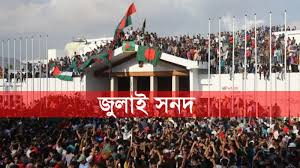 It was not the 1972 Constitution, but the July Uprising that liberated the country on 5 August by dismantling the fascist Hasina regime. In doing so, it rendered the constitutional order (1972 constitution) obsolete and defunct, replacing it with the direct expression of popular will through the July uprising.
The July Uprising paved the way for the return of Tarek Rahman from exile, secured the release and restoration of freedom for Khaleda Zia, and enabled Salauddin’s return from Shillong with his rights to speech and movement fully reinstated. It also facilitated the holding of elections and a referendum on 12 February, marking a transition toward democratic governance.
All these developments occurred under the interim government, whose very formation was made possible solely by the July Uprising. The uprising served as the foundational source of authority and legitimacy for the interim administration.
The sovereign will of the people, expressed through the uprising, became the supreme authority guiding all actions of the interim government, including the conduct of elections and the referendum, where all political forces and stakeholders participated in a democratic transfer of power.
The 1972 Constitution was neither followed during this period nor did it provide any framework for the formation or functioning of the interim government. It had become redundant and defunct, effectively superseded by the sovereign will of the people.
The now-defunct 1972 Constitution, prior to 5 August 2024, effectively consigned Tarek Rahman to 17 years of exile, stripping him of his democratic right to reside in his own country. Khaleda Zia was subjected to imprisonment and inhumane treatment, while Salauddin was forcibly taken to Shillong, where he remained for several years, deprived of his freedom to return to Bangladesh.
In this context, the July Uprising emerged as the ultimate source of authority and legitimacy in the political order. Accordingly, the court must be petitioned to issue an order directing the government to adopt and implement the referendum-approved July Sonod and its embedded reforms.
It is perplexing that lawyers representing opposition parties in Parliament are debating this matter on television talk shows rather than advancing it before a court of law by filing a lawsuit. This inaction is both baffling and difficult to justify.
Beyond the July Sonod: The challenge of economic recovery
At present, Bangladesh faces a badly broken economy marked by deep structural imbalances and systemic weaknesses. Therefore, revitalizing the fragile economy will be a far more difficult undertaking for any government. This challenge transcends partisan politics. The current investment climate and weak legal framework are not conducive to either foreign or domestic investment.
External constraints further complicate the situation. Shrinking export markets, rising protectionist measures, and increasing geopolitical instability pose significant obstacles to economic recovery and sustained growth. Industrialization, moreover, is a long-term process that takes years, often decades, to mature.
In the meantime, the country must contend with pressing economic and social difficulties, arising from the US-Israel led illegal war in the Middle East. This has already seen unprecedent rises in energy prices which are not only fuelling inflation, but also are predicted to cause global food shortages as fertilizers and other critical elements for agriculture depend on fossil fuels. Managing external shocks of this proportion requires skills and experiences, not just slogans or political machinations. The potential for public unrest in protest against widespread unemployment, rising inflation and fuel shortages amidst likely political turmoil arising from the failure to implement the July Sonod will certainly test the capacity of any government in power.
True development must go beyond slogans. It should focus on strengthening education and healthcare systems, creating sustainable employment opportunities, and improving income prospects for ordinary citizens. At the same time, infrastructure development, such as better roads and waterways, must connect remote and far-flung areas, ensuring mobility for work, trade, and travel. Bringing neglected regions into the mainstream of national development is essential for both economic vitality and social cohesion.
Compounding these economic difficulties is a deeply dysfunctional political system. If adopted and implemented sincerely, the July Sonod may help address some of these institutional distortions and restore confidence in governance.
The road ahead is fraught with challenges, but with principled leadership, vision, and sustained institutional reform, it is not insurmountable.
The need for visionary leadership
Against this backdrop, the nation requires political leaders capable of sacrifice and guided by a larger national vision. Moving the country forward will demand placing national interests above narrow partisan calculations.
Unfortunately, the contemporary politics in Bangladesh suffers from a profound absence of leaders with stature, gravitas, and visionary outlook. True leadership requires moral authority, courage, and the ability to inspire a nation, qualities that appear increasingly scarce in today’s political landscape.
Few among the current leaders evoke the respect and reverence once commanded by figures like Abdul Hamid Khan Bhashani. Leaders of that era drew legitimacy from personal sacrifice, moral conviction, and a deep connection with the masses, attributes largely missing in present-day politics.
As a result, many contemporary politicians risk leaving behind little or no legacy for the nation to cherish. Politics shaped by mediocrity rarely produces enduring institutions or transformative ideas, leaving the country yearning for genuine statesmanship.
Hope in a new generation
History, however, often fills leadership vacuums with new voices. Shaheed Osman Hadi inspired hope and many saw in him as a new Bhashani emerging with voices for the downtrodden and demands for justice (Insaf). He was a threat to the established political-economic-social order. Nevertheless, emerging figures such as Hasnat Abdullah, Nasiruddin Patwary, Nahid Islam, Akhter Hossen, Asif Mahmud, Sarjis Alam, Asaduzzaman Fuad and others of their generation may yet rise to meet the moment and contribute to the renewal of Bangladesh. Whether they will grow into true national leaders remains a question for time to answer.

Ghulam Rabbai
Ghulam Rabbai, a Freedom Fighter from Sector 9, is an international banker with experience across continents and a graduate of the University of Canterbury, New Zealand. His career reflects a blend of dedication to national service and expertise in global finance. Currently he resides in Toronto (Canada). Email: rabbani.ghulam@gmail.com

